

Pix and Words by Ali Williams
There are certain things you don’t expect to encounter at a YOU AM I gig. Assigned seating, for one. A string quartet, for another. And an audience politely keeping its backside attached to a chair while Tim Rogers does his thing. That’s practically a breach of the Australian rock and roll constitution. Yet there I was at The Tivoli, where one of Australia’s most cherished rock bands has decided to celebrate thirty years of Hourly, Daily by introducing four classically trained musicians to a catalogue of songs traditionally enjoyed with a beer in hand and considerably less concern for personal space.
The Strung Up tour and concept is deliciously peculiar. Take four musicians whose considerable achievements have largely involved making a glorious racket together, give them an additional four musicians armed with violins, viola and cello, then see what happens when everyone tries to behave themselves. The answer, as Brisbane discovered, was that they were rules that absolutely needed breaking. .
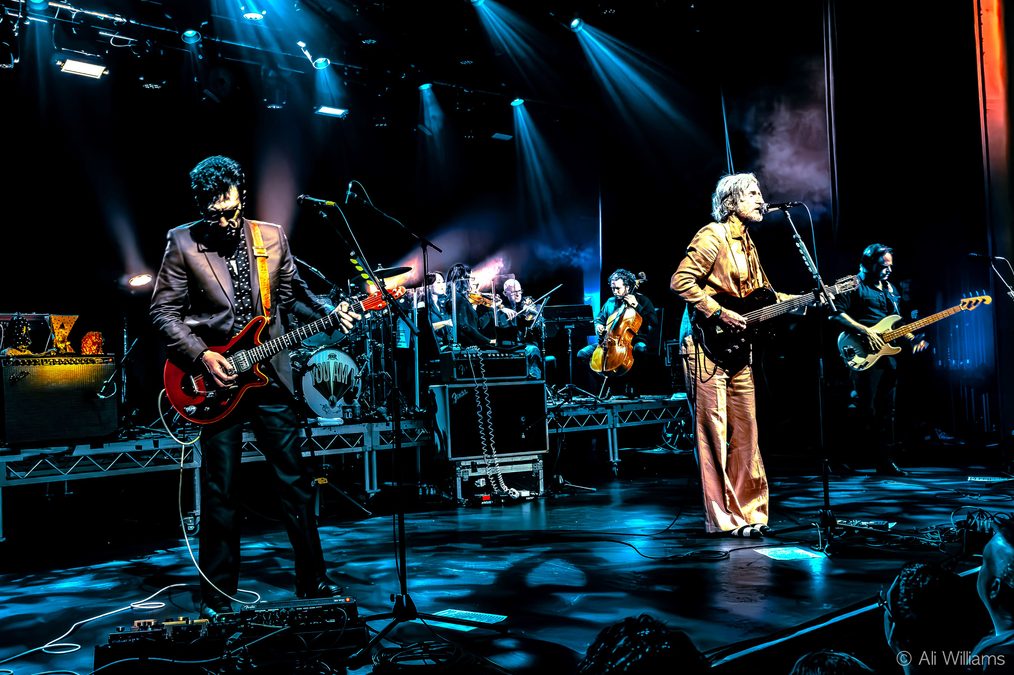
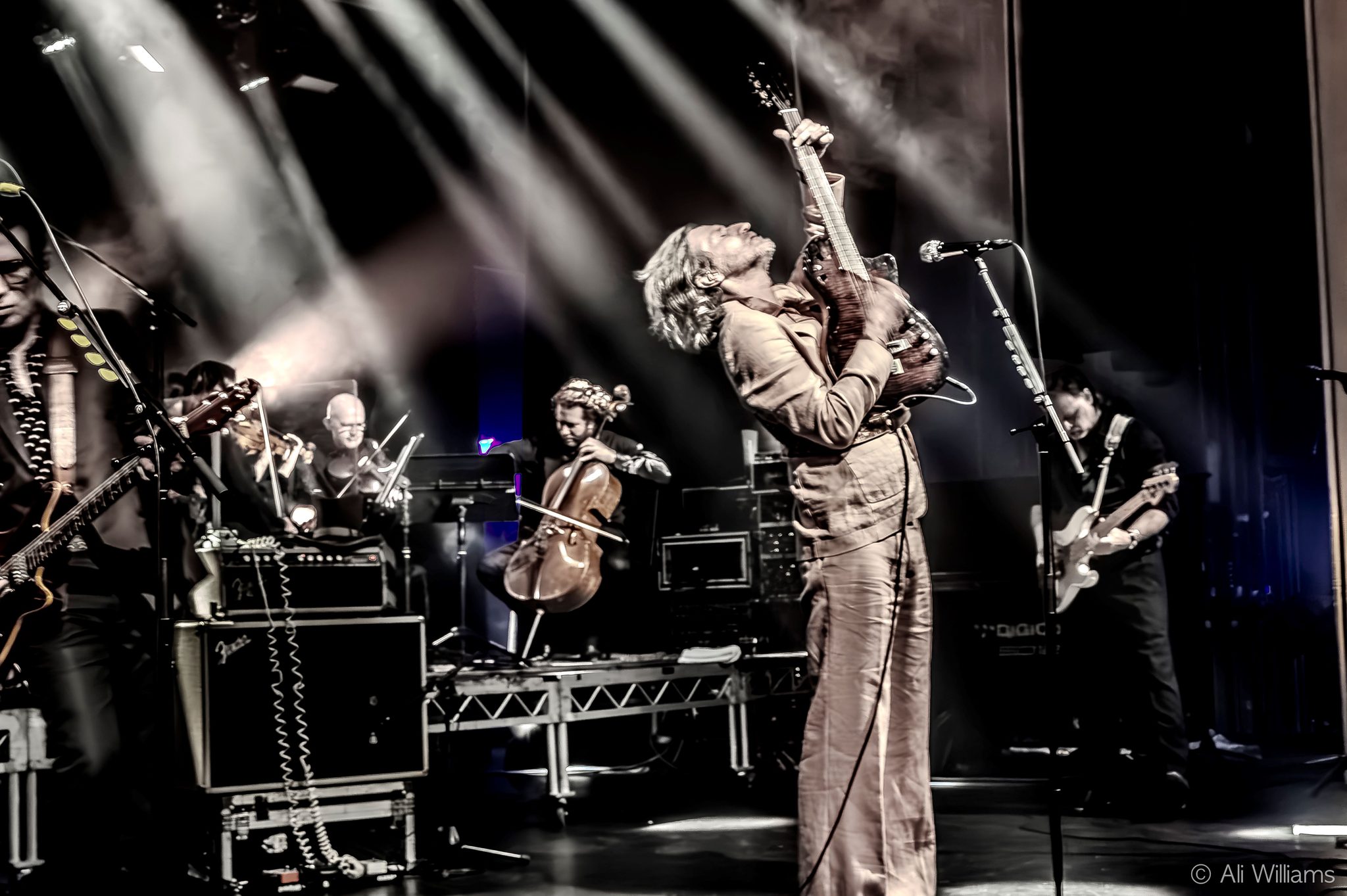
Dressed in a rather spectacular coral-coloured suit, complete with ruffles and footwear that disregards conventional fashion advice, Tim Rogers graced the stage. Rogers, has delightfully spent the last 30 years embedding himself in the collective psyche being known as a man who breaks all the rules, doing so in fabulous fashion. He’s a man that could either front a rock band or attempt to sell you a questionable timeshare on the French Riviera. Either way, you’d probably listen.
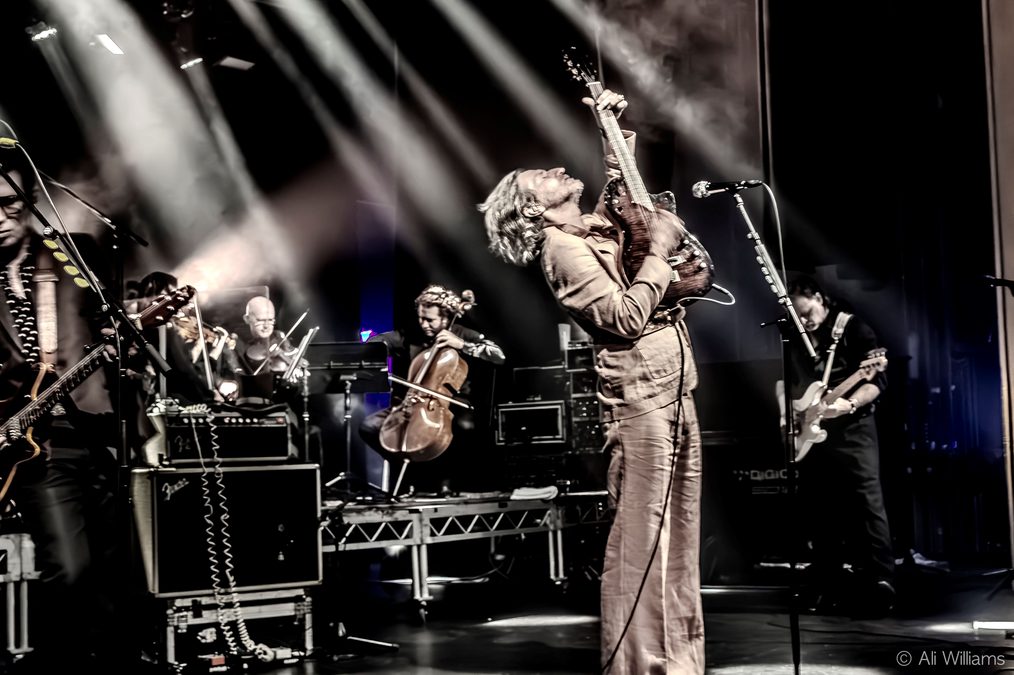
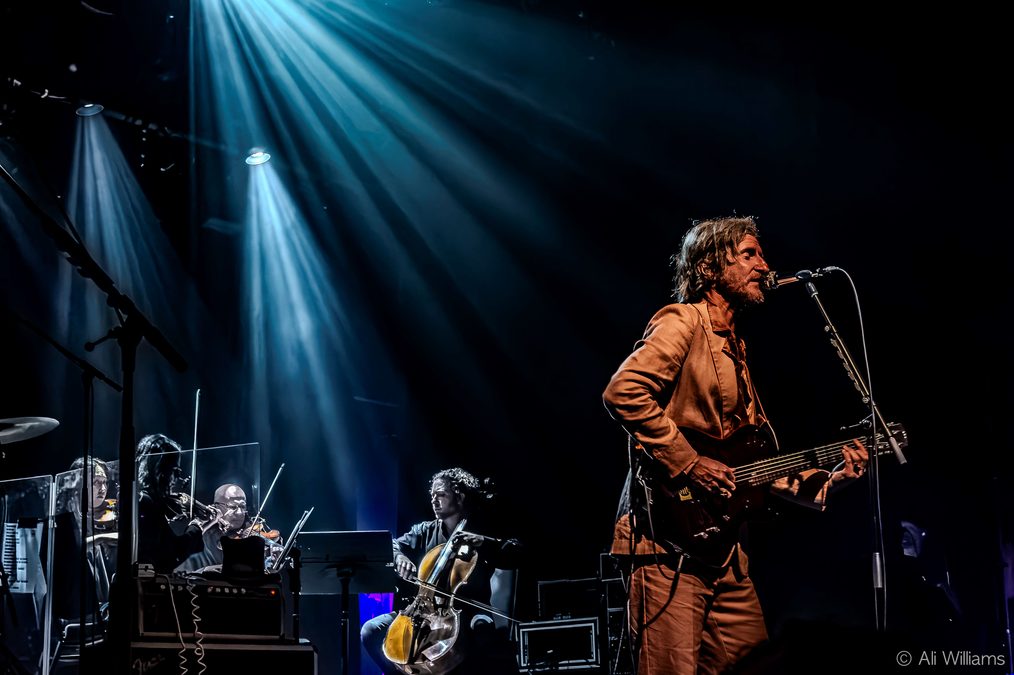
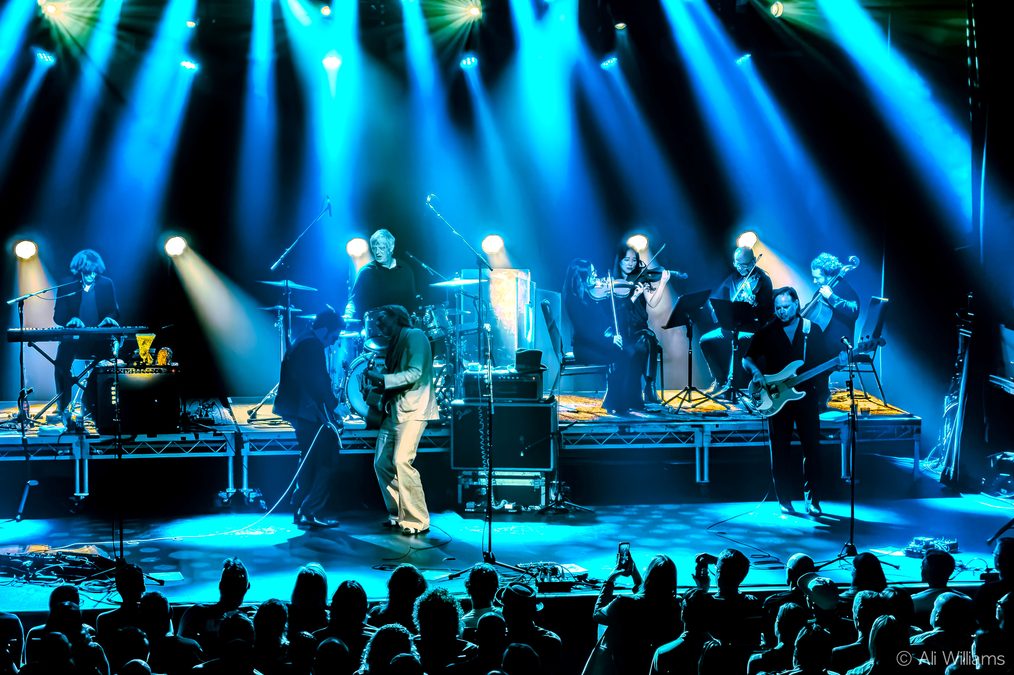
Alongside Andy Kent, Davey Lane and Russell Hopkinson, Rogers was joined by the wonderfully named Electric Eel Orchestra, a string quartet entrusted with bringing another dimension to songs that have already enjoyed three decades of being played, pulled apart and put back together.
It’s a fascinating prospect, particularly because YOU AM I have never been a band inclined to play their material with clinical precision. Their charm has always included the unexpected, the occasional musical detour and Rogers’extraordinary ability to alternate between beautifully articulate songwriter and a bloke whose train of thought has wandered off to find the nearest bar. Thankfully, none of that personality has been sacrificed in the pursuit of sophistication.
Opening with Daemons, the band immediately put the expanded arrangements to work. The song provided an interesting introduction to the additional instrumentation, establishing how comfortably the quartet can sit alongside the band’s familiar guitars, bass and drums without demanding ownership of the entire performance.
The early appearance of Berlin Chair properly put the new arrangements to the test. A song so deeply embedded in the band’s live identity could easily have suffered from unnecessary decoration, but the lower-key interpretation offered another perspective without elbowing the original out of the conversation. Lane’s guitar retained its character, Kent’s bass provided the familiar muscle, and Hopkinson kept proceedings grounded while the quartet explored the melody from a different angle. The result was recognisably YOU AM I, only with a few more people contributing to the argument.
Dilettantes followed, before Damage introduced another opportunity to appreciate the compositions from a different perspective. Both selections demonstrated that the evening wasn’t simply an exercise in revisiting Hourly, Daily, but an opportunity for the band to explore the broader catalogue with some rather talented additional company.
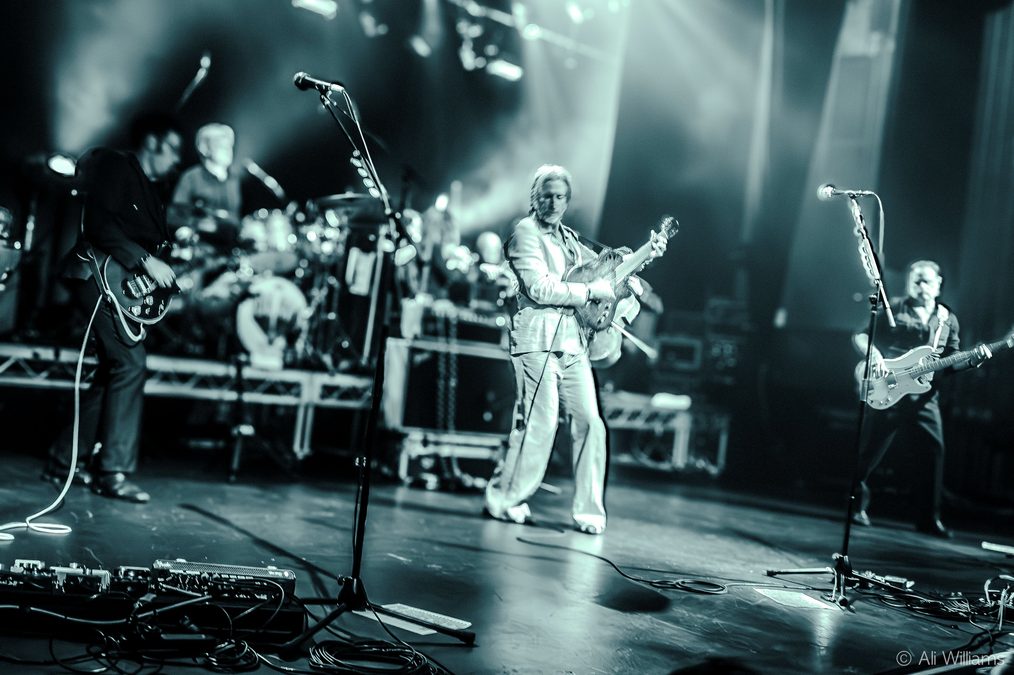
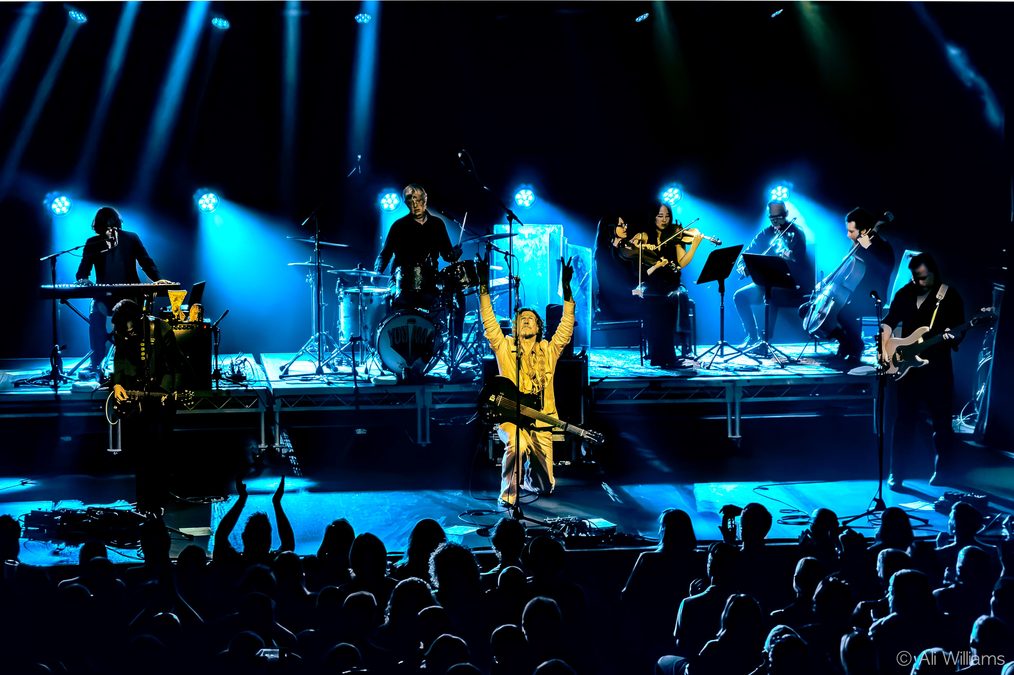
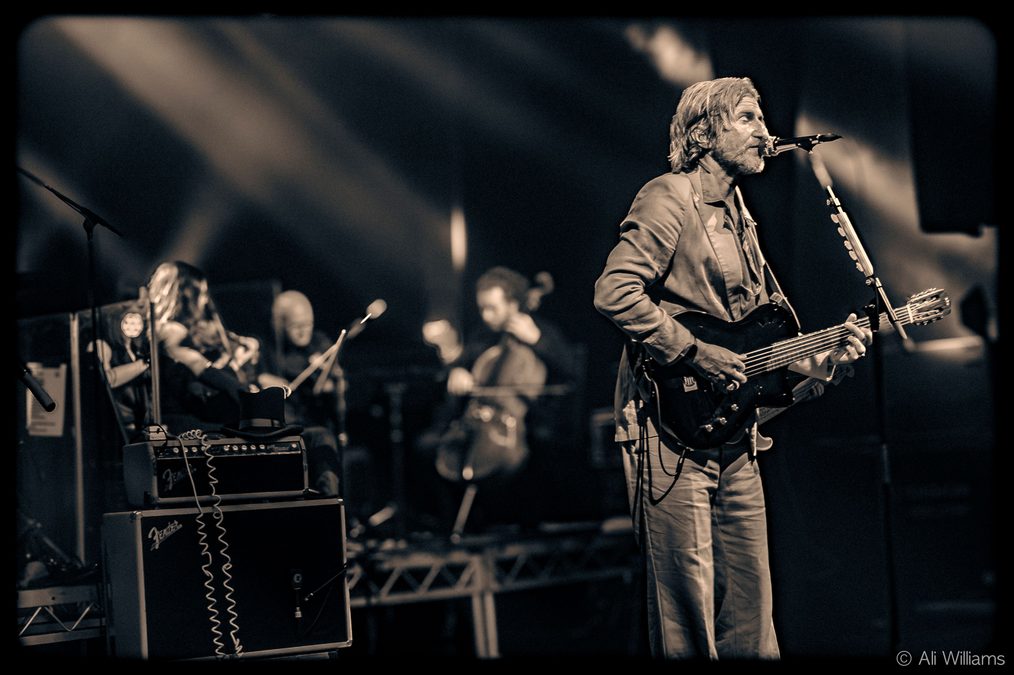
And what a pleasure it was to hear Davey Lane working within those arrangements. His guitar playing has always been an essential part of the band’s musical personality, but on this occasion there was room to appreciate his restraint as much as his enthusiasm. He knows when to let a phrase breathe and when to remind everyone that there’s still a very capable rock guitarist standing onstage. Andy Kent, meanwhile, remains the quietly indispensable presence holding much of the musical conversation together. With additional instruments competing for space, his bass lines became particularly important, providing a firm connection between the band and quartet without turning the arrangements into an unnecessarily crowded affair.
Rusty Hopkinson is a drummer whose considerable musicianship makes him ideally suited to the unusual demands of this collaboration. His understanding of the band’s rhythmic character allowed the additional instrumentation to explore unfamiliar territory without losing the foundations that make the songs unmistakably YOU AM I.
The 30th anniversary of Hourly, Daily provided the evening’s reason for existing, although anyone expecting a meticulous start-to-finish reproduction of the album was in for a surprise. Instead, the band drew from across its catalogue, and allowed the strings to interact with material from different periods of its career. An album anniversary should be an excuse to celebrate the music, not an obligation to reproduce the running order from the back of a CD case.
Tuesday was particularly suited to the exercise. Its melodic character practically invited the quartet into the arrangement, while Purple Sneakers provided another opportunity to hear an old favourite given a different musical treatment. Between the two came Open All Night, demonstrating the sheer breadth of material the band has accumulated over its recording career. The Boy’s Angry at the Water followed Purple Sneakers, offering a further reminder that the group’s songwriting has continued to develop well beyond the albums that first established its reputation.
But the quieter material provided some of the evening’s most rewarding moments. Hourly, Daily possesses a gentle emotional intelligence that has served it remarkably well over thirty years. The string arrangement drew attention to its melodic construction without smothering the simplicity of the original. For a few minutes, there was an unusual stillness in material accustomed to being surrounded by considerably more noise.
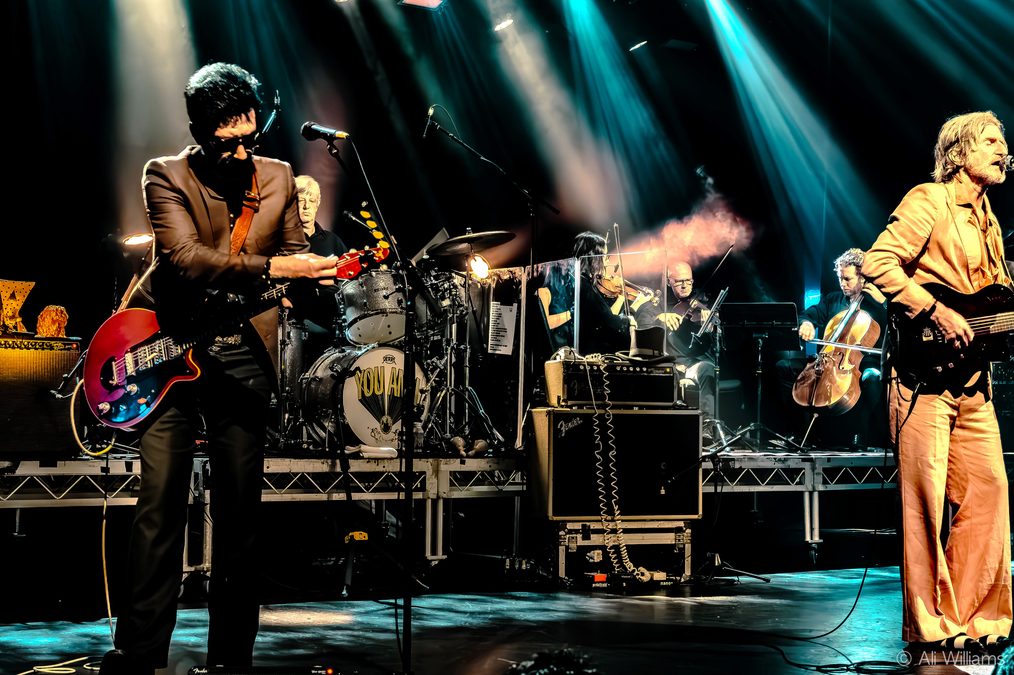
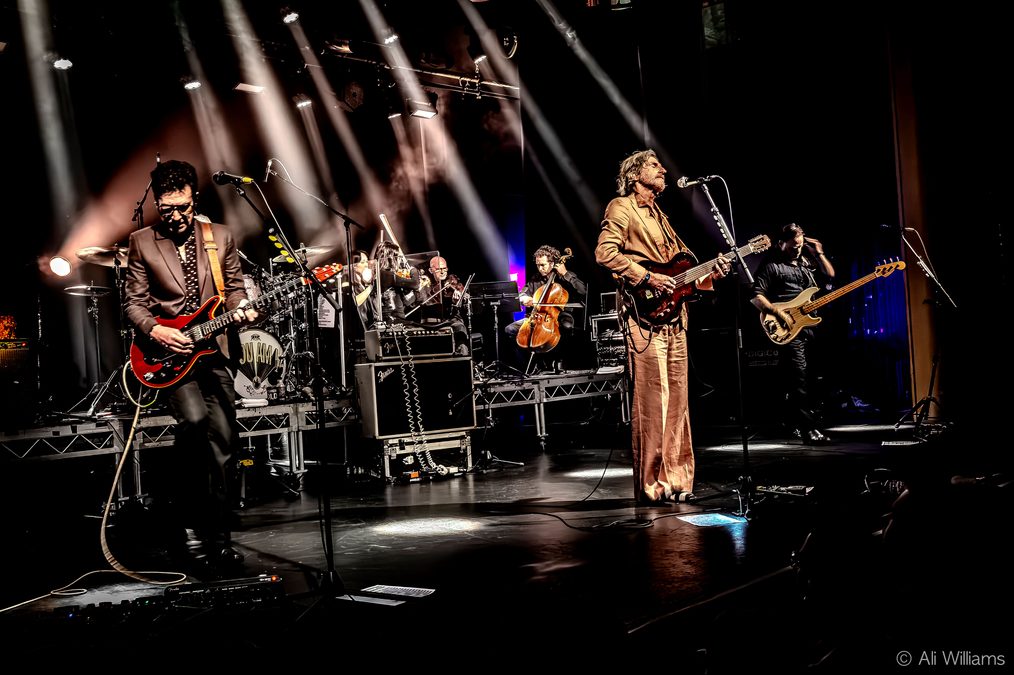
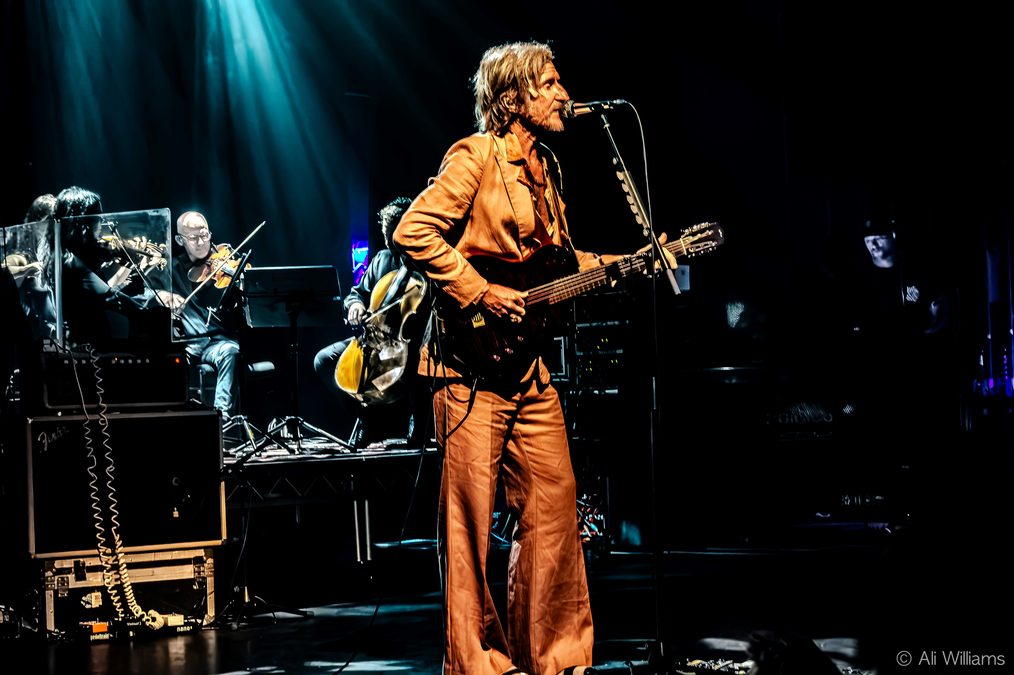
Heavy Heart proved equally affecting. Rogers has always had a particular gift for writing about human vulnerability without dressing it up in grand declarations, and the additional instrumentation suits the song beautifully. Its emotional character is tender, occasionally imperfect, and unmistakably his own. Rogers has never been a singer whose appeal depends upon immaculate vocal technique. His phrasing, personality and ability to inhabit a lyric remain far more interesting than the prospect of delivering everything with clinical perfection.
Quite frankly, expecting Tim Rogers to deliver a completely polished performance would be rather like asking a cockatoo to observe library etiquette. His between-song commentary has long deserved almost as much attention as the music. There are few Australian frontmen quite so capable of wandering into an unexpected conversational excursion and somehow making the entire experience seem perfectly reasonable. His particular combination of eloquence, humour and occasionally questionable logic has become part of the band’s identity, as recognisable as Kent’s bass playing or Lane’s guitar work.
Yet beneath the humour, there’s genuine affection in the relationship between these musicians. Three decades of shared musical experience have given them an understanding that can’t be manufactured, and the collaboration with the Electric Eel Orchestra offered an opportunity to appreciate those individual contributions from another angle. Who Turned Out the Lights and Please Don’t Ask Me to Smile are further reminders of the band’s extraordinary songwriting history. There’s an honesty to the compositions that doesn’t require explanation, and the strings allowed their emotional detail to emerge without turning them into theatrical productions.
Heavy Comfort continuds the celebration of Hourly, Daily, before Moon Shines on Trubble added another selection from the anniversary album. Both demonstrate just how naturally these arrangements can accommodate the band’s more melodic tendencies. The Ocean, however, is where the expanded instrumentation offered one of its most unexpected rewards. Its muscular bass and guitar foundation provided a more challenging playground for the quartet, whose contribution introduced a wonderfully tense musical dimension. The violins worked against the song’s heavier elements rather than merely following them, creating an arrangement with genuine bite.
It also demonstrated that this collaboration isn’t simply about making rock songs sound prettier. Some material benefited from additional tenderness; other songs became considerably more confrontational when four string players are given permission to get involved. The Piano Up the Tree closed the main set, bringing another selection from Dilettantes into the evening’s musical conversation and demonstrating how comfortably material from different stages of the band’s career can sit together within these arrangements.
The encore opened with When You Know What You Want, before an Electric Light Orchestra cover, 10538 Overture, provided another particularly appropriate inclusion. Given ELO’s own enthusiasm for combining rock instrumentation with orchestral arrangements, there’s something wonderfully fitting about YOU AM I borrowing a song from a band that helped establish the possibilities of such musical partnerships.
How Much Is Enough brought the evening to its conclusion, allowing the familiar chemistry between Rogers, Lane, Kent and Hopkinson to have the final word. And that chemistry remains the most compelling part of the whole production. Thirty years is a long time to spend making music together. Long enough for personalities to clash, fashions to become unfortunate photographic evidence and artistic relationships to reach their natural expiry date. Yet these four musicians still possess an understanding that can’t be taught, rehearsed or purchased with an expensive arrangement.
They listen to one another. They leave room for mistakes. They find humour in the unexpected and continue treating their own songs as living pieces of music rather than exhibits requiring careful preservation. For all the novelty of seeing YOU AM I accompanied by a string quartet, the evening offered something considerably more rewarding than an anniversary celebration with a few additional instruments. It demonstrated the remarkable quality of the songwriting itself. Remove some of the volume, rearrange the familiar parts and invite four additional musicians into the musical conversation, and the compositions still hold their own.
The strings were wonderful. The arrangements were thoughtful. The music retained the humour, humanity and personality that have made this band so thoroughly entertaining for more than three decades. And as the audience finally rose from its carefully allocated seating, there was a rather lovely realisation. YOU AM I have managed to spend an evening looking positively classy without becoming classless in the slightest.
Thirty years on, Tim Rogers still can’t be trusted with a microphone and an unsupervised train of thought. Thank Christ for that.