

Words and pix by Ali Williams
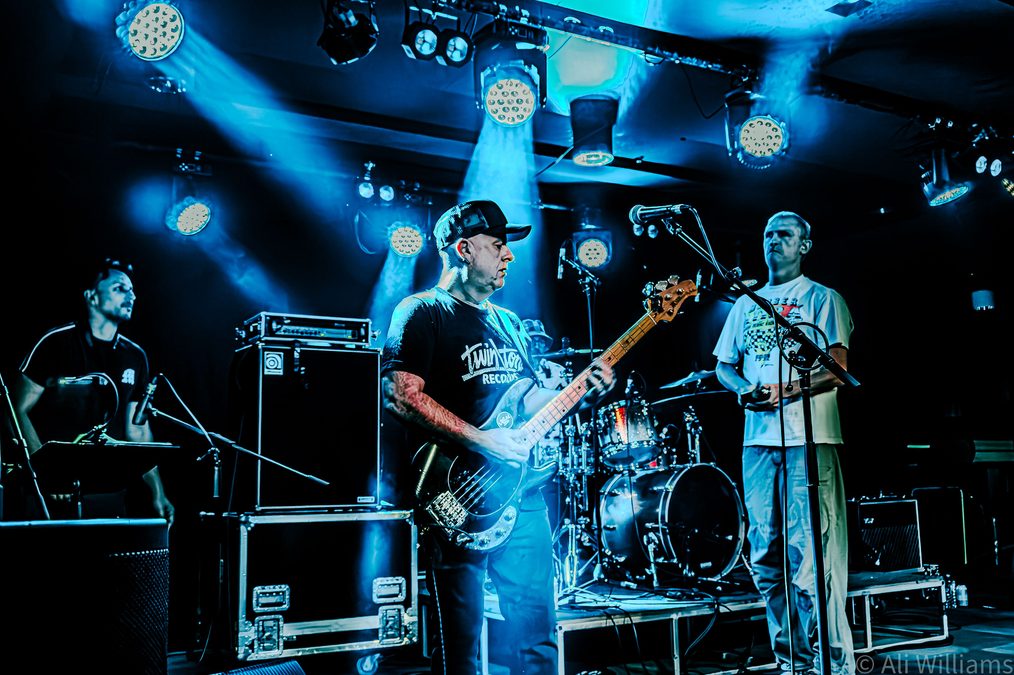
Thirty-three years is a long time to maintain a musical relationship, particularly when the relationship involves six opinionated musicians, an unreasonable number of competing genres and two brothers who approach the microphone with entirely different intentions. Yet SKUNKHOUR have managed to make a career out of their collective refusal to behave conventionally, and their latest Australian tour, Back To Basics, found them back in Coolangatta with plenty of unfinished business.
For anyone unfamiliar with their particular contribution to Australian music, SKUNKHOUR emerged from Lismore in the early 90’s with a sound that was difficult to categorise and apparently even harder to imitate. Funk, hip hop, rock and soul were all legitimate participants, with the Larkin brothers delivering a combination of rap and melodic vocals that gave the band its unmistakable identity. Australia wasn’t exactly overflowing with acts attempting anything similar, and SKUNKHOUR had enough confidence in their own musical convictions to make a substantial impression without requesting permission from the prevailing trends. The result was a catalogue of genuinely inventive Australian music and a following that has remained remarkably committed, even through the years when the band wasn’t particularly active. Their return to the touring circuit has also attracted a younger audience, an interesting development considering some of these songs were written before a sizeable portion of the current crowd had mastered walking. Evidently good music has no trouble finding new listeners, even when its original promotional campaign involved technology now considered an archaeological discovery.
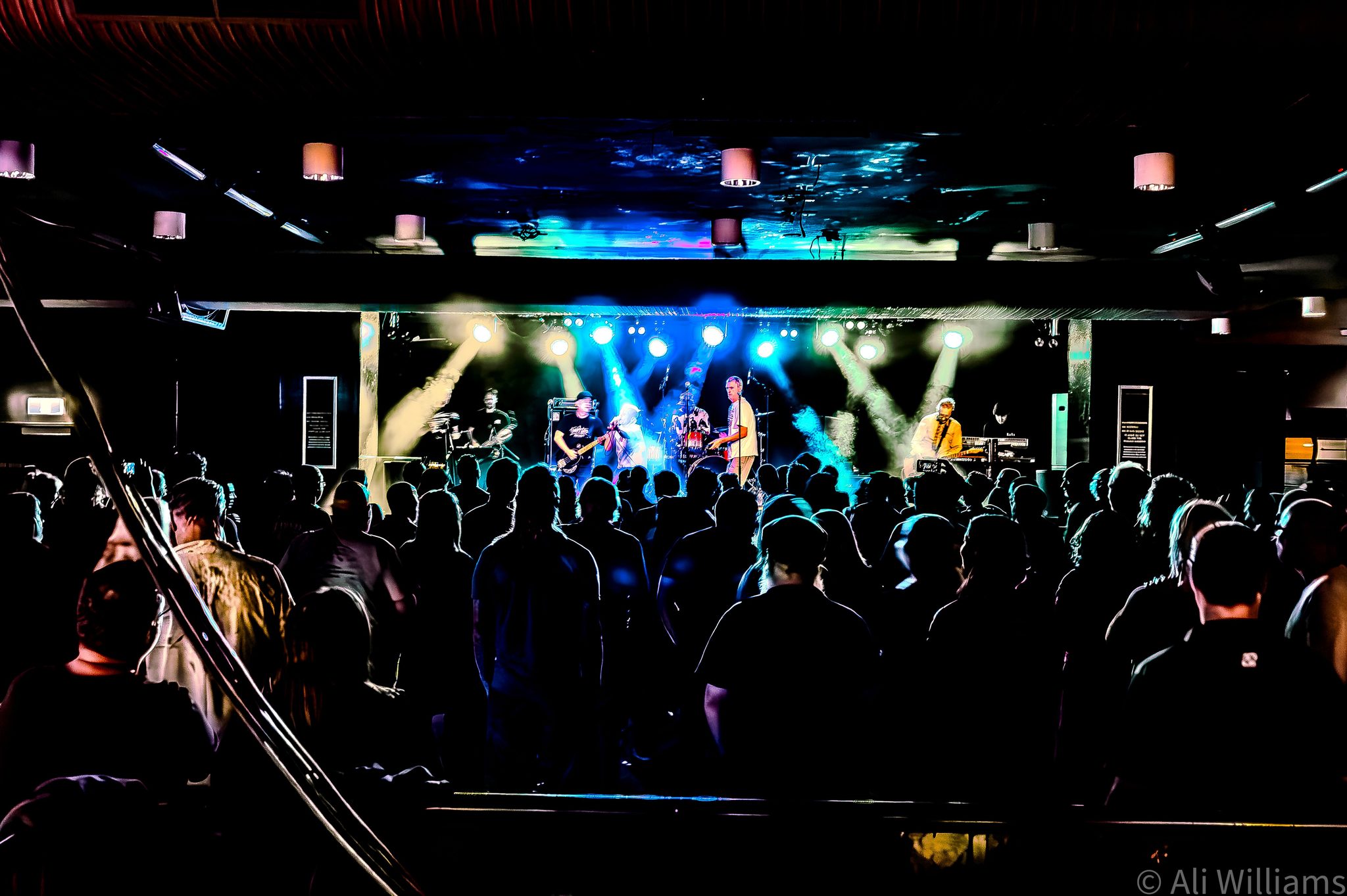
With the Back To Basics tour concentrating on the band’s earlier material alongside newer compositions, The Balcony at Cooly Hotel was an appropriate destination for a performance that would put the music ahead of unnecessary production. The upstairs venue offers a degree of intimacy that suits SKUNKHOUR’s particular strengths, allowing audiences to appreciate the interaction between musicians rather than spend the evening watching distant figures on a stage.
Opening proceedings were Gold Coast outfit SUPER MASSIVE, featuring Malina Hamilton-Smith and former Machine Gun Fellatio drummer Glenn Abbott. Their combination of electronic funk, dance and rock made them a fitting addition to the bill, providing a lively introduction to an evening where rhythm would be receiving considerable attention. With Hamilton-Smith handling vocals and Abbott’s drumming supplying the physical punch, the duo brought their own distinct musical personality to the occasion. The pairing also made sense beyond the shared funk influences, with both acts demonstrating an appetite for musical ideas that don’t particularly benefit from being confined to one genre.
For SKUNKHOUR, the evening’s appeal lay in the extraordinary amount of character contained within the songs themselves. The musical arrangements are busy, occasionally unpredictable and full of unusual decisions, yet their appeal has never depended upon technical complexity alone. Beneath the elaborate arrangements are strong melodies, memorable lyrics and bass-driven rhythms responsible for a considerable amount of involuntary bodily movement.
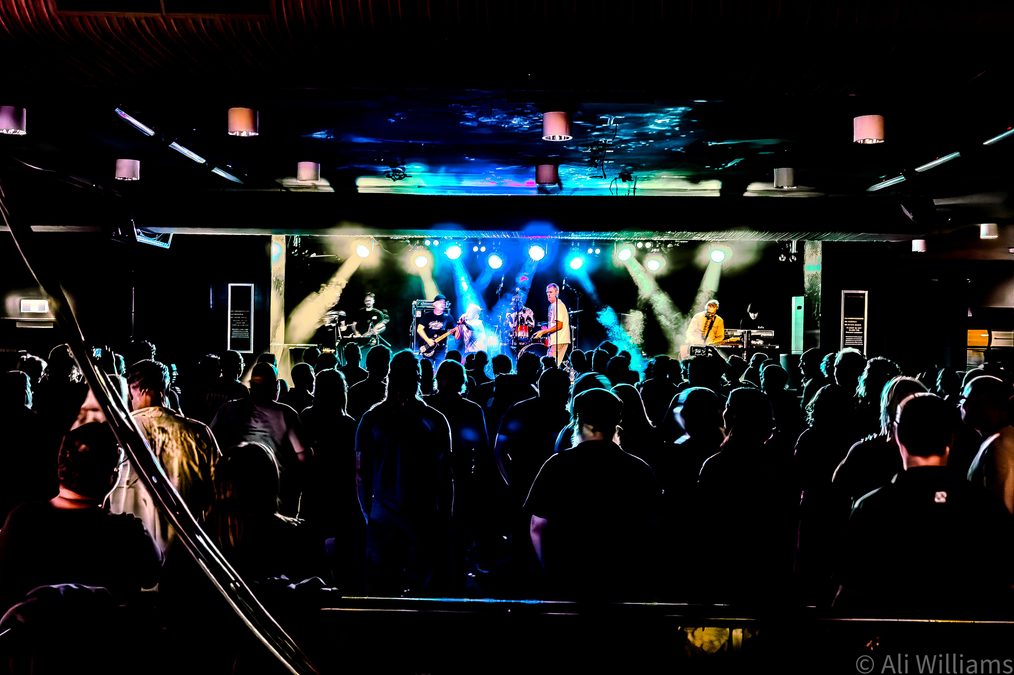
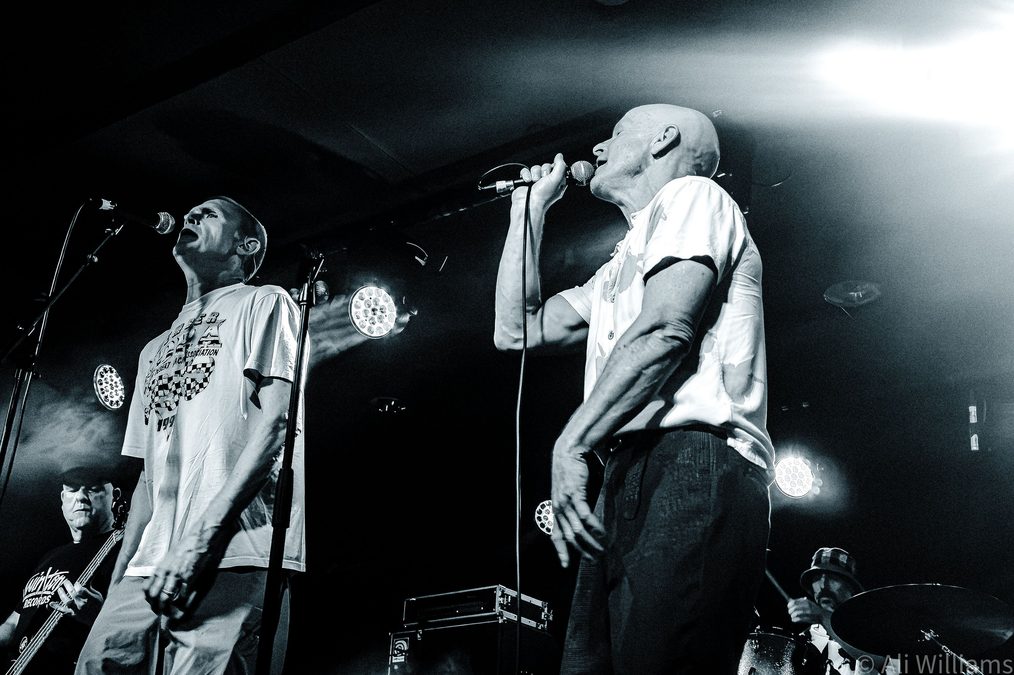
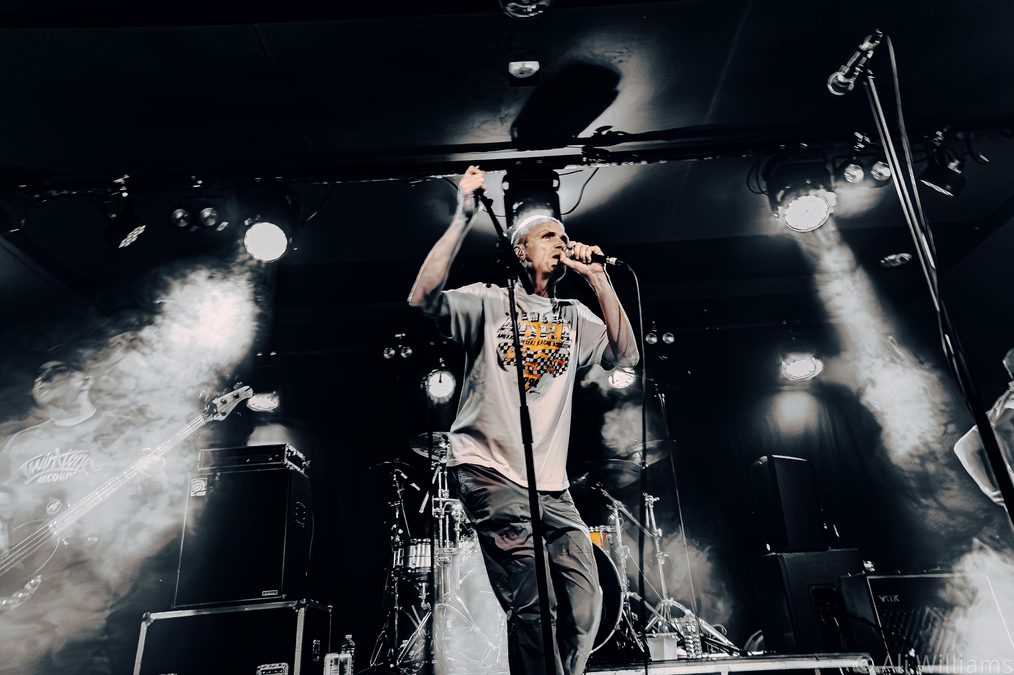
The Back To Basics material provides an especially entertaining examination of the band’s early ambitions. Those songs were written by musicians who were clearly interested in several different things at once, and the resulting compositions contain ideas that remain unusual even by contemporary standards. Del’s rhythmic vocal delivery and Aya’s melodic phrasing are fundamental to their character, while the instrumental arrangements provide enough variation to keep familiar material interesting without requiring substantial alterations. The relationship between those elements is particularly satisfying in a live setting. A passage driven predominantly by bass and percussion can accommodate an abrupt vocal entrance, a guitar interruption or a sudden melodic expansion without the composition losing its identity. Rather than supplying separate demonstrations of individual ability, the musicians contribute to arrangements requiring constant awareness of one another. It is a demanding way to perform, although considerably more entertaining for an audience than watching several people compete for the longest solo.
There is also the considerable pleasure of hearing Aya Larkin sing. His vocal style has always brought emotional depth to material that might otherwise be remembered primarily for its rhythmic inventiveness. His ability to move between restrained passages and powerful melodic statements gives SKUNKHOUR a range that relatively few bands operating in this musical territory can claim. Del’s contribution provides a different intensity altogether, his unmistakable delivery bringing humour, attitude and additional rhythmic detail into songs already carrying plenty of personality. And it would be criminal to discuss SKUNKHOUR without acknowledging the bass. Dean Sutherland has been responsible for some of the band’s most memorable musical ideas, with lines that are practically compositions in their own right. Together with the percussion and guitar, his contribution explains why the music demands more than casual listening, although attempting to analyse every individual part while enjoying yourself would probably be an unnecessarily complicated way to spend a Thursday evening.
The enduring appeal of songs including Up To Our Necks In It, Breathing Through My Eyes and Back To Basics is hardly mysterious. They are ambitious compositions with enough individuality to remain recognisable decades after their release. The melodies are memorable, the rhythms retain their appeal and the writing has a personality that cannot be manufactured by assembling a collection of fashionable influences. For longtime listeners, the Back To Basics tour offers an opportunity to hear material that originally established the band’s reputation, while newer audiences are discovering the extent of their catalogue without having to pretend they were present for its beginnings.
Perhaps the most satisfying aspect of SKUNKHOUR’s return is their continued commitment to making new music rather than relying exclusively upon material written during their initial career. Their recent releases demonstrate that the band’s creative interests remain active, and incorporating those songs into the touring repertoire gives the performances a broader purpose. The musicians have developed considerably since their earliest recordings, but the willingness to experiment with contrasting influences remains fundamental to their approach. There is something particularly Australian about SKUNKHOUR’s peculiar musical history. They established an identity that was unmistakably their own, achieved commercial recognition without entirely surrendering their eccentricities and developed a following that has continued to introduce their music to successive generations. Their career has never followed a particularly straightforward course, which seems entirely appropriate for a group whose songs rarely travel in straight lines either.
Coolangatta’s inclusion on the Back To Basics tour was another opportunity to appreciate a band whose contribution to Australian music deserves considerable recognition, particularly for the freedom and originality of its writing. More importantly, SKUNKHOUR remain musicians with enough curiosity to continue exploring the possibilities within their own material. Thirty-three years into the relationship, the Larkin brothers and their colleagues still have plenty to discuss musically. Fortunately, their disagreements over genre have produced some excellent songs.