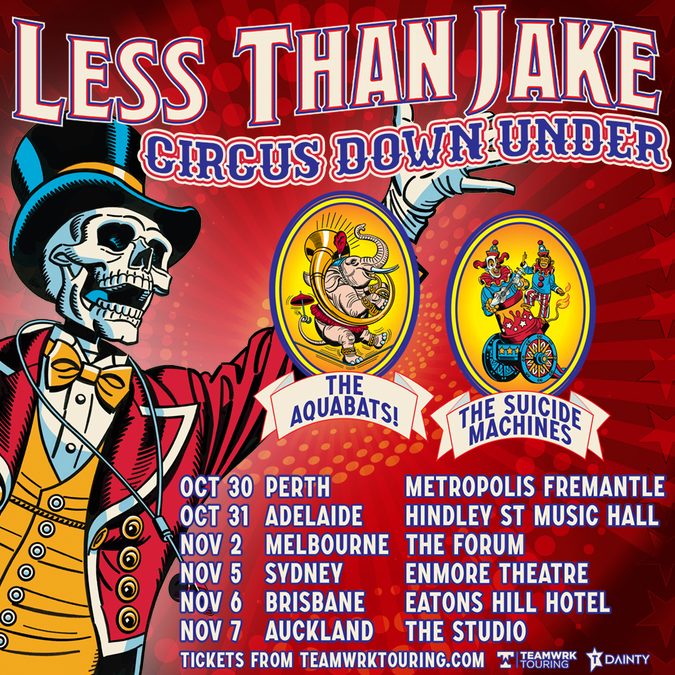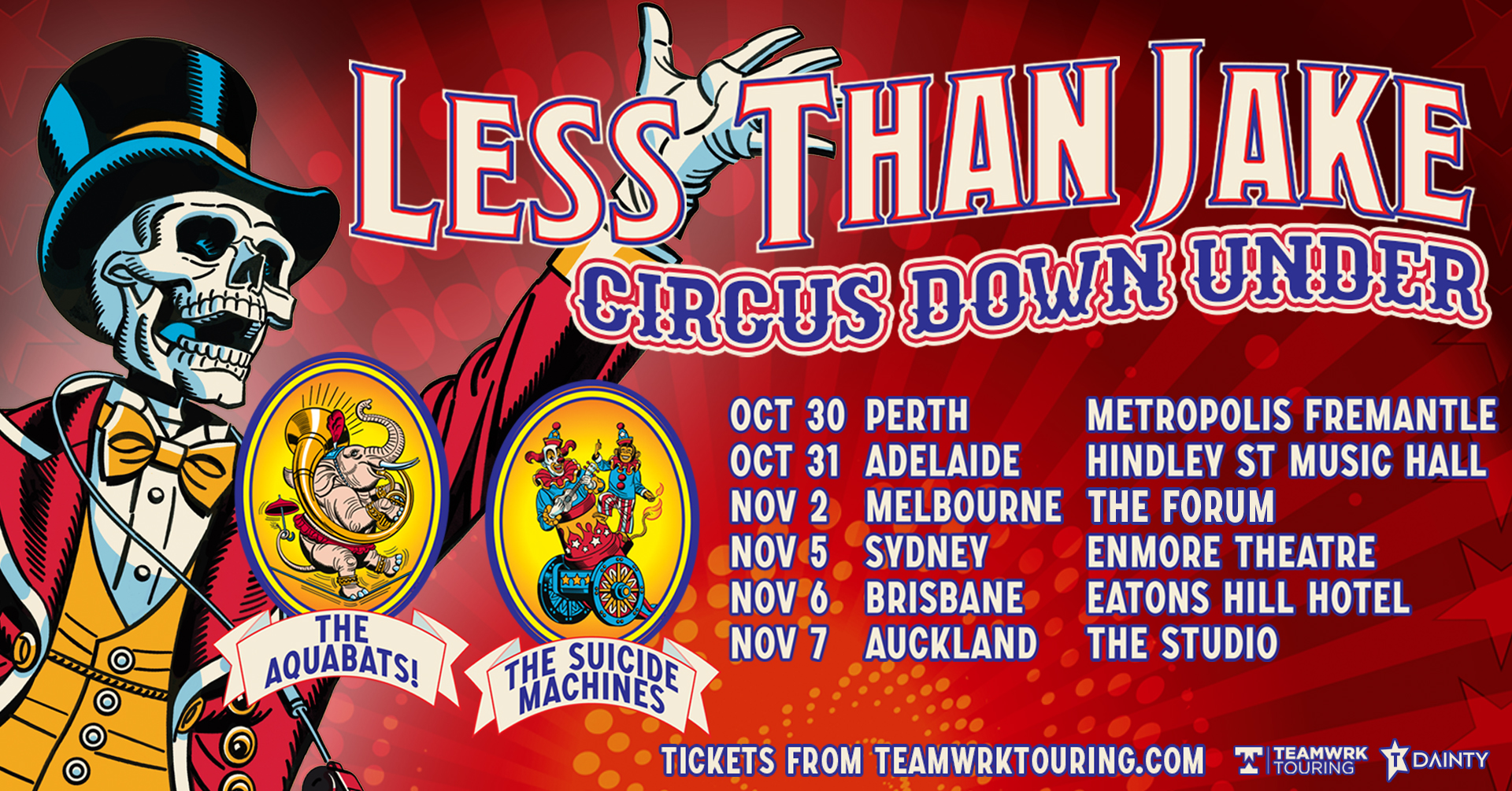



After years away from Australian shores, The Aquabats are ready to bring their colourful brand of superhero-fuelled ska-punk back to Australian audiences, and frontman Christian Jacobs aka The MC Bat Commander couldn’t be happier about the prospect. Speaking with HEAVY ahead of the band’s return, Christian reflected on their previous Australian visits, including a particularly memorable Soundwave experience that saw the band’s dressing rooms located inside an old prison.
“It was an ancient prison and our dressing room was literally in a prison cell,” he recalled, describing the bizarre experience of having bands effectively locked away backstage. But strange dressing rooms are only part of the Aquabats experience. For more than three decades, the band has built a reputation around its unmistakable superhero costumes, larger-than-life performances and a commitment to making music an escape from the ordinary.
Christian explained that the costumes were never simply about creating a memorable image. Their origins can be traced back to the late 1980s and early 1990s, when he was involved in the California punk and ska scenes. While punk shows could become increasingly violent, the ska scene offered a more inclusive environment where people came together to dance and have fun.
“We started The Aquabats kind of as a way to justify us getting into the scene,” he explained. The band’s superhero identity began almost accidentally, when a friend who worked at a wetsuit factory created helmets from wetsuit material for their first show. The response was polarising, but rather than abandon the idea, the band embraced it. More than 30 years later, that willingness to be different remains central to their identity. Christian sees the costumes as a way of finding their audience, explaining that people who embrace the band’s unusual aesthetic are generally ready to embrace its sense of fun, too.
That philosophy extends to the stage, where The Aquabats aim to create what Christian describes as a “live-action cartoon”. Videos, inflatables, beach balls and constant activity help turn each performance into an interactive experience rather than simply a band playing songs. “We want everyone to be involved and have fun,” he said. “There’s a lot of love at the show.”
The band’s influences stretch back to classic cartoons and Japanese live-action television, including Johnny Sokko and His Flying Robot, alongside Johnny Quest, The Herculoids and Super Friends. Those childhood inspirations helped shape the colourful, fantastical world The Aquabats continue to inhabit. Despite their longevity, the band isn’t interested in standing still. Christian explained that some newer songs have deliberately returned to the sound of their earlier material, bringing their musical journey full circle. The pandemic also changed his perspective on performing, making every show feel more precious.
“We treat it kind of like this could be our last show,” he said, explaining that the band no longer takes the opportunity to perform or connect with fans for granted. That connection is something Christian values deeply. He recently witnessed an emotional response from fans when The Aquabats played Mexico City for the first time in decades, describing a crowd of around 10,000 people and an overwhelming outpouring of affection.
Looking ahead, the band’s ambitions include returning to Australia, visiting Japan and New Zealand, and potentially revisiting their television and film adventures with another short film or extended episode. For Australian fans, the message is clear: The Aquabats aren’t simply returning to play a set of songs. They’re bringing an entire world with them; one built on imagination, inclusivity, ridiculous costumes and the simple belief that live music should be fun.
After all these years, the superheroes are still ready to save the day, one beach ball at a time.