


OUT NOW
Via Epitaph Records
Words by Annette Geneva
Fifteen years is a long time between records. Long enough for a band to get buried in punk culture references. Long enough for the world around them to change completely and in Mike Ness’ case, for life to intervene in ways considerably bigger than music. But Social Distortion never really belonged to a particular moment anyway. Their influences spanned over several decades, broke geographical barriers and were there for way too many skateboard videos as a soundtrack.
They have always existed somewhere between punk rock and something older, more cultured. Chuck Berry. Johnny Cash. The Stones. Cheap motel rooms and tattoos that seemed like a good idea in your early twenties. Songs about fucking up, surviving it, and then living long enough to understand exactly how badly you fucked up.
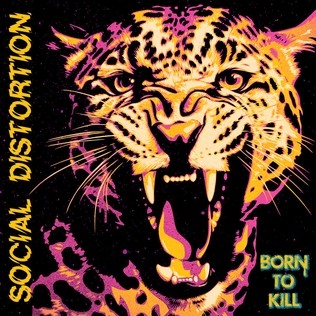
Born To Kill, their eighth studio album and first since 2011’s Hard Times and Nursery Rhymes, drops after the longest silence of Social Distortion’s career. In an interview with HEAVY, Ness admitted that while he never intended for fifteen years to pass, he knew that when the band finally returned, the record “couldn’t be a sleeper”. It had to get people’s attention. It did. It does.
With Born to Kill the band have not suddenly decided to become something else, I feel like they just created a new dimension for new fans to step into even not all the old timers understand the need to evolve. Ness has spoken about returning to the music that first made him want to be in a band, particularly the sounds of the late seventies. Lou Reed and David Bowie are openly referenced across the record. He described wanting to return to something more “primitive”, playing with different grooves and rhythms rather than trying to polish forty-plus years of history into something trendy. And primitive is good. Especially when you have spent your entire career proving that three chords can carry an entire life.
The album opens with the title track, which sets the tone for the album as a whole – feedback, guitars and that unmistakable voice, somehow still carrying the same combination of sneer and exhaustion. The song openly tips its hat to Lou Reed and Iggy Pop (“Rock ‘n’ Roll Animal gonna come your way!”), making the album’s intentions immediately clear. This is a record about where Ness came from, but it isn’t interested in cementing itself there.
The momentum continues with No Way Out, a driving, restless song haunted by the past. It has that particular Social Distortion trick of making regret sound enormous enough to shout along to. The song itself has roots stretching back decades. Nothing in the Social Distortion universe ever disappears completely. It just comes back older, bruised and carrying a better story. According to Ness there were about 40 songs to choose from by the time he was ready for the album to be finished.
The Way Things Were is one of my favourite tracks off the album. Ness goes back to his youth in Fullerton: to dead-end kids, railway tracks and the people who slipped through the cracks. It sits naturally beside songs like Story of My Life and I Was Wrong, but the difference is his perspective. Those songs looked at damage while Ness was still relatively close to it. The Way Things Were looks backwards across decades. Nostalgia is dangerous territory for a punk band. But this doesn’t feel like someone wishing they were young again. It feels more like taking inventory of the people and places that made you. I know I’m biased as hell here. I’m a millennial, I live for nostalgia, but I also feel like it’s an overused feeling. Especially for former scene kids. It became its own landscape surrounding us wherever we go.
If The Way Things Were looks back at youth, Tonight looks at what happens to relationships while life is busy happening elsewhere. There is something beautifully familiar about it. The storytelling, the melody, the sense of two people watching something they once believed in slowly disappear. It feels like the grown-up relative of Story of My Life. This is why I think of this album as another chapter to a bigger story.
Partners In Crime carries another of the album’s explicit seventies references, this time to Bowie’s Rock ’n’ Roll Suicide. But the references throughout Born To Kill never feel like Ness rifling through someone else’s record collection. These are the songs that built him. There is something wonderfully circular about a man who has influenced generations of punk bands making a record about the artists who first made him want to pick up a guitar.
One of the record’s most obvious departures, and perhaps one of its most charming. Crazy Dreamer, with Lucinda Williams appearing alongside Ness and a honky tonk piano pushing the song towards country, blues and roots, Crazy Dreamer reminds me that Social Distortion are so much more than just punk. Mike Ness has always had one boot in punk and the other somewhere near a Johnny Cash record. Maybe one day he finally releases another solo album.
Covering Chris Isaak’s Wicked Game is a dangerous proposition because the original already feels untouchable. Social Distortion have always understood the assignment when covering niche and unexpected songs. The point isn’t to reproduce the original perfectly. It is to drag the song into your own world until it sounds as though it has always lived there. In Ness’s hands, the song loses some of its dreamlike seduction and gains something rougher and more weathered. Especially super lush guitar work – the tone is definitely biffier than the original. It’s always interesting to learn about the contrast with the original and cover songs.
The record snaps back into motion with Walk Away (Don’t Look Back). A riff-heavy, forward-facing song built around one of the album’s recurring ideas: the past matters, but eventually you have to decide whether you are going to keep living inside it.
Another song with history behind it, Never Goin’ Back Again carries the strange tension at the heart of the entire album. Because Born To Kill is constantly going back. Back to the seventies. Back to Fullerton. Back to old songs. Back to the records that made Mike Ness want to start a band. But going back and being trapped in the past are not the same thing. “Reminiscent” is the word used in these lyrics. Makes perfect sense. One of the more vulnerable moments on the record – Never Going Back Again – touching on love, memory, mortality and the possibility that separation might not necessarily be the end. After everything Ness has been through since the last Social Distortion album, it is difficult not to hear songs about mortality differently.
And then Born To Kill ends not with a grand farewell, but with Social Distortion still sounding like themselves. Don’t Keep Me Hanging On glides and Over You – this is that one track that all fans agree on. Bass, guitars, Ness’s voice and that same battered belief in rock ’n’ roll that has been there since the beginning. I mean, I get it – it’s not really a punk record when you get through it – it’s pure rock’n’roll.
Fifteen years passed. Mike Ness survived cancer. Punk rock became history, became fashion, became history again. Entire generations discovered Social Distortion after the band had already been around longer than they had been alive. And still, somehow, there is a guitar. There is a song. There is another record.
Born To Kill is not trying to sound young (unlike reddit trolls suggest). Thank God for that. It is something far more interesting: a record made by people who remember exactly what it felt like to be young, but have lived long enough to understand the cost of it.
Mike Ness once again proves that he has never needed many words to say something enormous. Social Distortion are still here, perhaps survival has always been the most punk rock thing about them and unmistakably Rock’n’Roll guitars weeping are just sprinkles on a ridiculously punk rock cake.