


Out 26 September, 2025
Via Metal Blade Records
Words by: Daryl Daryl
Revocation’s New Gods, New Masters is one of those rare albums that makes you want to grab the merch, buy a gig ticket, and get in the pit. It takes tried-and-true tones and drives them into fresh, fearless territory.
For two decades, Revocation have been one of extreme metal’s most consistent yet adventurous bands, threading the needle between technical precision and raw aggression. On their ninth album, they have produced a record that not only upholds that legacy but might just be their most compelling statement yet. It is a high impact release that demands attention and rewards repeat listening.
The album begins at a breakneck pace, with the kind of modern metal production and metronomic tightness listeners have come to expect. But almost immediately, something different emerges. The bass does not simply rumble beneath the guitars; it bridges the gap between percussion and guitars, pulling rhythm and tune together in a way that few bands in this sphere achieve. Alex Weber’s playing provides the record with a pulse that is muscular, melodic, and essential. It glues the sound together while adding depth.
Guitar work has always been Revocation’s calling card, and these songs do not disappoint. What makes this record stand out is the sheer variety in the rhythm playing. One moment you are hit with jagged, percussive staccato riffs, the next with sweeping melodic lines, before being whipped into a blur of razor-sharp modern metal picking. It is a balancing act that never tips into monotony. Overlaying that foundation are the band’s trademark twin leads. Melodies and harmonies that recall classic metal’s golden age but with fresh, unexpected note choices that keep them far from predictable nostalgia.
Vocally, frontman Dave Davidson stretches further than before.
There is no shortage of the genre’s staple fry screams, but what impresses is the variety: depth, grit, and a sense of expression that avoids the flat uniformity found in so many of his peers. That vocal dynamism, combined with the adventurous guitars and assertive bass, makes the record both crushing and engaging from start to finish.
It does not hurt that Revocation have brought some heavy friends along for the ride. Jonny Davy of Job for a Cowboy lends truly inhuman vocals to Cronenberged, a grotesque sci-fi horror homage to both David Cronenberg and Rick and Morty. Travis Ryan of Cattle Decapitation explodes across Confines of Infinity, while Gorguts legend Luc Lemay adds tortured gravitas to the haunting closer Buried Epoch. The wild card guest appearance is jazz virtuoso Gilad Hekselman, whose outro solo on The All Seeing bends and spirals the record into a dazzlingly strange place. His contribution feels audacious but perfectly judged, underscoring Revocation’s refusal to stagnate.
Lyrically and thematically, Davidson channels both his academic precision and his fascination with sci-fi dystopias. New Gods, New Masters grapples with artificial intelligence, human dependence on technology, and the idea that in abandoning old gods we have simply enshrined new ones, worshipping innovation and progress with the same zeal once reserved for religion. Songs like Sarcophagi of the Soul and Dystopian Vermin excoriate society’s addictions and hypocrisies with venom sharpened by terrifying plausibility.
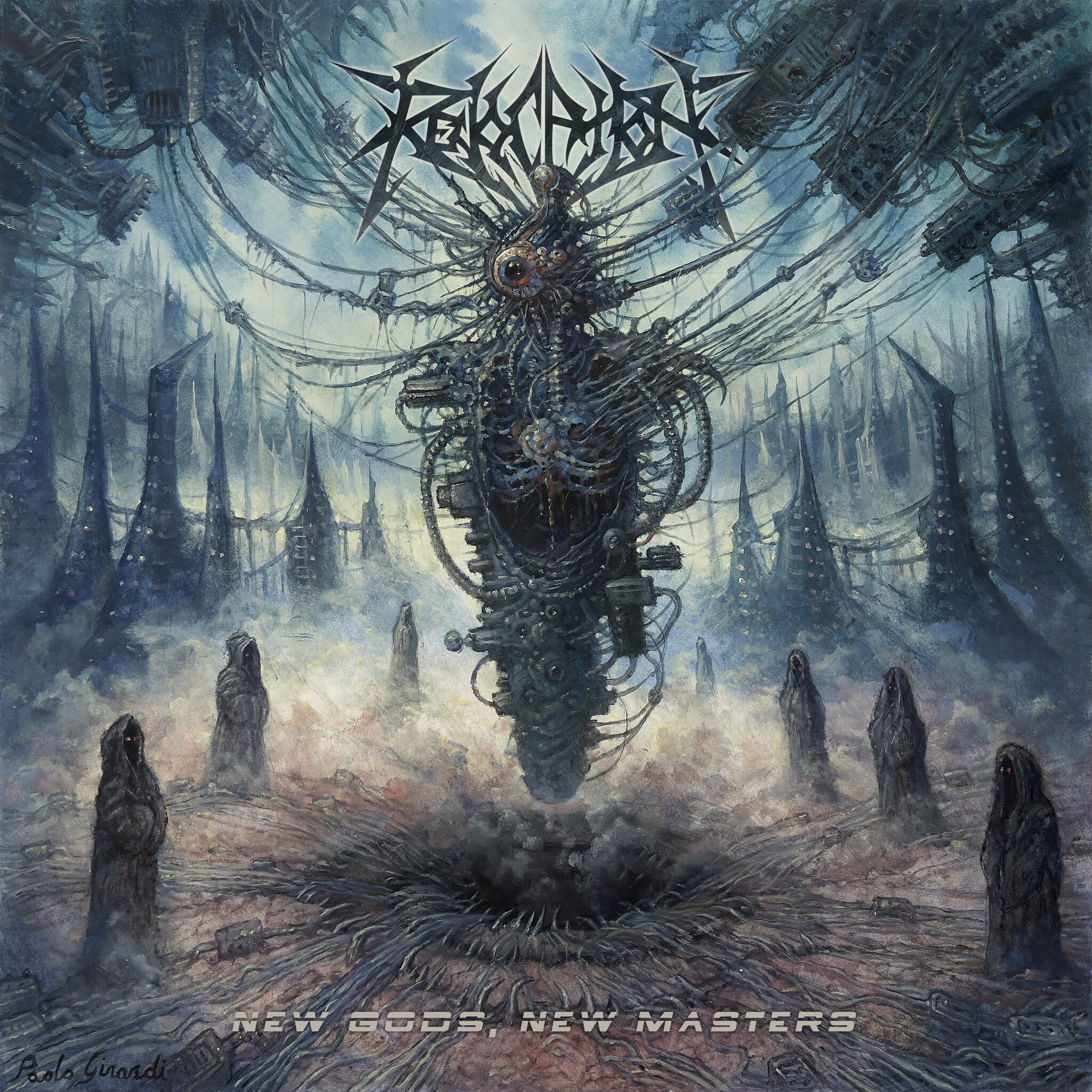
The album’s impact is amplified by Paolo Girardi’s cover artwork, a grotesque and awe-inspiring vision of techno-nightmare mythology, complete with call-backs to the band’s earliest releases. It is a fitting visual encapsulation of the record’s thematic weight: humanity birthing its own downfall out of wires, teeth, and blind devotion.
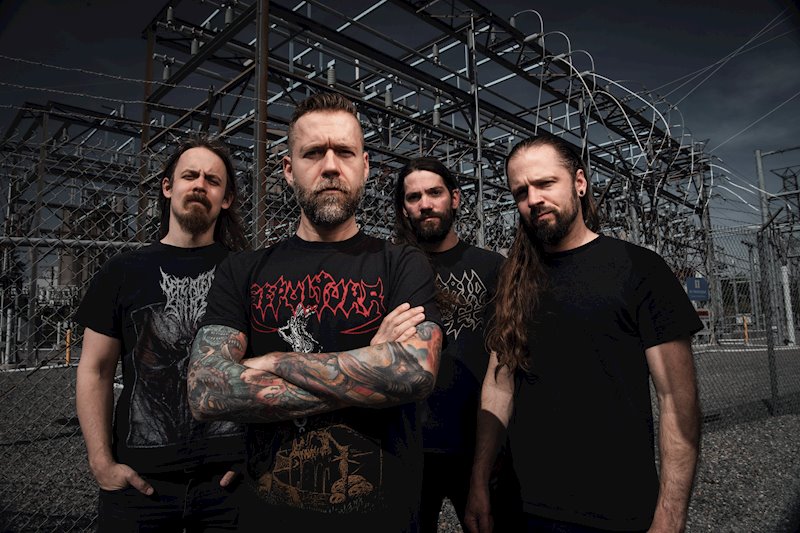
Celebrating their 20th anniversary, Revocation could have coasted on reputation. Instead, with the fresh fire of guitarist Harry Lannon and bassist Alex Weber, alongside drummer Ash Pearson and Davidson’s relentless drive, they have created a record that feels vital. If 2022’s Netherheaven was praised as their best in a decade, New Gods, New Masters sharpens that trajectory further. It is more focused, more ferocious, and more musically adventurous.
What makes this album special is the balance: brutal yet nuanced, technically dazzling yet emotionally resonant. Revocation may be dissecting dystopias, but their own future looks anything but bleak.