

Interview by Ali Williams
Australia has been claiming a little piece of MUDHONEY for longer than most of the world had worked out exactly what to call them. The Seattle band first made it down here in 1990, possibly becoming the first of the emerging grunge contingent to do so. Speaking with HEAVY, guitarist Steve Turner still has a fairly simple correction for anyone getting too enthusiastic with the historical labels. “We still think of ourselves as a punk band.”
That distinction probably explains quite a lot about MUDHONEY. Formed in 1988, they had records out and were already touring before Nirvana and Pearl Jam became global names. They were there before Seattle became an international obsession, remained there while record companies went looking for the next band wearing old clothes and carrying a distortion pedal, and kept playing after the attention moved elsewhere. Turner remembers the explosion around his friends with far more amusement than envy. MUDHONEY were already earning enough to tour, pay their bills and continue making music, an achievement that was hardly standard operating procedure for a Seattle band at the time. Then everything around them became enormous very quickly.
“I was happy where I was at. I don’t want to be a rock star. I never wanted to be a rock star or anything. I just want to play some music.” Watching friends become extremely famous only strengthened that opinion. “I definitely don’t want that. I want one paycheck. Give me one of your paychecks and I’ll be happy.” Fair. Fame optional, cheque accepted.
Turner had already shared considerable history with several of the people who would soon become central to the Seattle story. He and Mark Arm had played in Green River alongside Stone Gossard and Jeff Ament, and although Turner admits he did not understand Pearl Jam when they first emerged, time has dealt with that particular disagreement. Gossard remains one of his oldest friends, and the relationship between Turner, Ament and Gossard apparently functions perfectly well under a long-standing diplomatic arrangement. “We just agree to disagree about music.”
His memories of Nirvana are affectionate. MUDHONEY played shows with them early, and Turner particularly loved About A Girl from their first record because its pop instincts separated it from some of the heavier material. What came afterwards, however, became difficult for everyone involved. Seattle went from an active music community to an international fixation, bringing a level of attention Turner never wanted for himself. When Kurt Cobain died, Turner felt something changed permanently. “I think when Kurt died, that was kind of the end of it. I think psychically the world was just done with it.”
MUDHONEY continued, although the appetite for anything carrying a Seattle postcode had inevitably begun to fade. Turner did not spend much time worrying about it. His attention was already elsewhere, particularly in the city’s underground. He was running a record label and releasing smaller bands while some of Seattle’s biggest acts were filling arenas. He even managed to go through the entire 1990s without seeing Soundgarden, despite having watched them in their earliest days when Chris Cornell was still behind the drums.
There was also no shortage of strange little pieces of music history happening in his immediate vicinity. The Presidents of the United States of America, for instance, formed during a late-night party at the house where Turner was living with Jason Finn. People were drinking, instruments appeared, a jam started and a band happened.Australia, meanwhile, was never simply another destination on the MUDHONEY touring schedule. Long before that first visit in 1990, Australian punk and underground music had already reached them.
Turner readily names Radio Birdman, The Saints and The Scientists among the bands that helped shape MUDHONEY, with Kim Salmon remaining a particularly important figure. They were also listening to the stranger reaches of Australian music, including Lubricated Goat and feedtime, Turner remembers when they first came to Australia and the surrealness of the situation, ‘We were just like, we’re hanging out with Kim Salmon? What?”
That Australian connection has never really disappeared. Mark Arm has since sung with The Saints, while MUDHONEY bassist Guy Maddison is originally from Perth and now lives in Melbourne. Conveniently, Melbourne has also found its way into Turner’s preferred plan for the next MUDHONEY record, “I want to make another record. I’m feeling itchy to do another MUDHONEY record.”
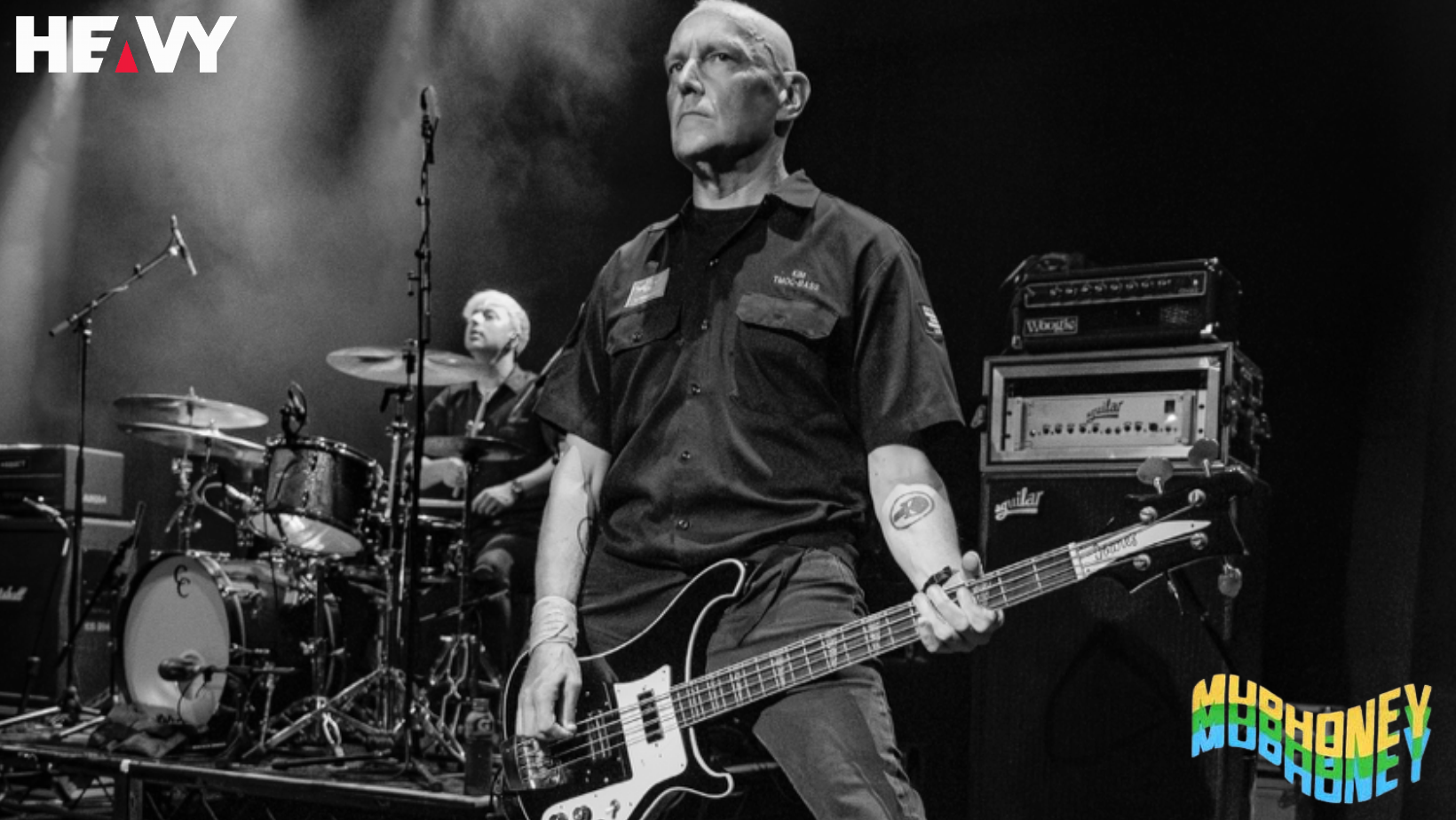
The problem is geography. Turner now lives in Boise, Arm and drummer Dan Peters remain in Seattle, and Maddison is in Melbourne. Technology could solve part of that problem, but MUDHONEY have little interest in constructing songs through an exchange of files. “We’re not the kind of people that email demos to each other. We have to be in the room together. We do music old-school ways, where we need the four of us to be in the room together.”
Turner calls Melbourne one of his favourite cities in the world and has been floating the idea of simply getting everyone to Australia for several weeks and making the record here. Whether that actually happens remains undecided, but his reasoning includes excellent studios, Maddison’s local connections and the completely respectable personal objective of spending three weeks in Melbourne.The fact Turner is already thinking seriously about another album also answers the inevitable question surrounding a band that has now been operating for close to four decades: how much longer? Apparently MUDHONEY ask themselves the same thing each time they make a record.“Every time we do a record, it’s like, is this the last one? Everybody’s gonna bow out first, because we’re not young.”
There are a few physical reminders. Turner cheerfully admits most of MUDHONEY now have hearing aids, offering a reasonably convincing public service announcement for wearing earplugs before another generation decides ringing ears are some noble part of the gig experience. Age has also introduced Turner to another fascinating development: MUDHONEY fans can now be grandparents. He remembers the first time, around 15 years ago, that a woman approached him at a show and announced she was a grandmother while also being younger than he was. “I’m like, oh, fuck. We’ve entered a different space.”
The audience has not simply aged with the band, though. Younger listeners keep arriving. Turner says that has been happening since the 1990s, often through MUDHONEY’s connection to Nirvana and Pearl Jam. Some would turn up dressed conspicuously like Cobain, earning their own affectionate designation from the band.“We just called them the Sad Cobains.” Now the process of discovery has changed again. Turner’s 21-year-old son, sporting a bright red mohawk and singing in one or possibly two punk bands depending on what has happened this week, has grown up with instant access to music history. Turner, a lifelong record collector, can throw an obscure artist into conversation only to discover his son has already watched a documentary about them online.
There is one area where father and son remain properly divided: folk punk.“I think [those bands] are terrible. But it’s just fine. I’m not supposed to like your music, dude. Your music is supposed to offend me. I’m your dad.” Parenting objectives achieved.
More interesting to Turner is the way younger listeners approach music without many of the old rules. Albums once dictated how songs were heard, genres created fairly rigid borders and bands spent enormous effort sequencing a record correctly. Streaming listeners can simply find one song, decide they like it and continue elsewhere. “I think it’s totally valid, the way young people listen to music. They’re not as encumbered by genres and things like that. Whatever they like, that sounds good, I like that.”
He remains firmly committed to vinyl personally. He worked at a record-pressing plant in Portland for three years and now hosts a show on Radio Boise where he plays vinyl exclusively. He is particularly fond of seven-inches, although playing a radio set filled with two-minute songs apparently turns leisurely DJing into administrative cardio. That obsession has also produced something specifically for this Australian visit. MUDHONEY are bringing a tour-only seven-inch containing two covers: Billy Childish’s Sally Sensation and AIM Tastes Good by Texas punk band Really Red. The pressing will only be available in Australia, with any survivors heading across to New Zealand afterwards.
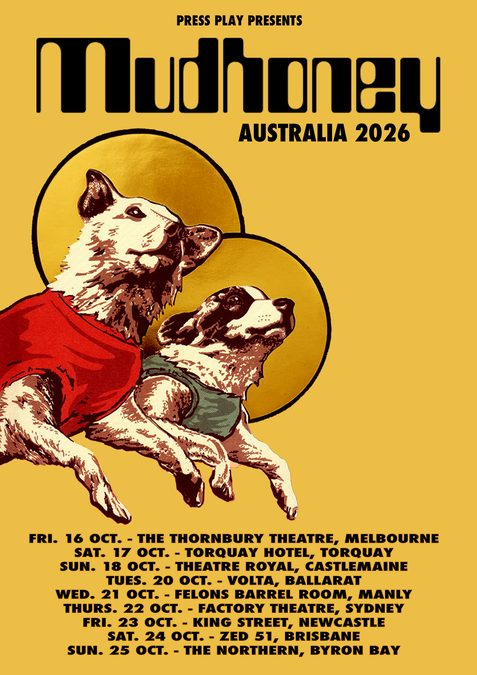
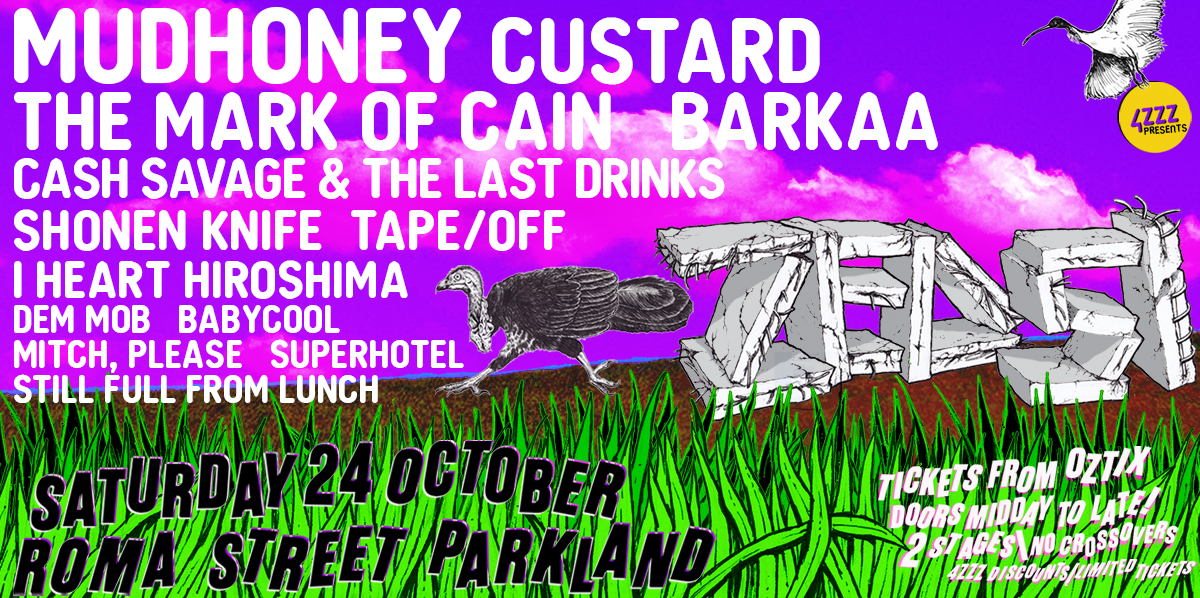
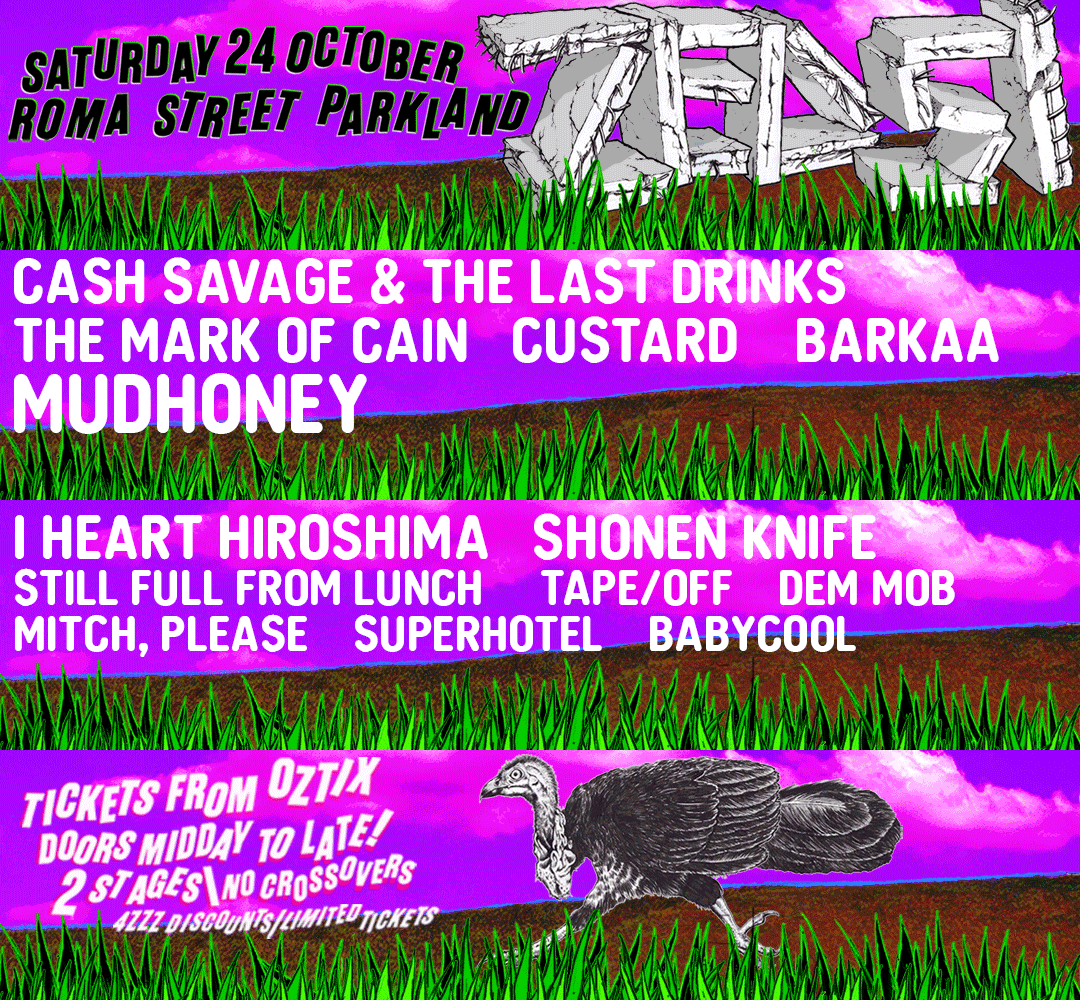
Australia will also get plenty of MUDHONEY itself. The tour takes the band through Melbourne, Torquay, Castlemaine, Ballarat, Manly, Sydney and Newcastle before finishing at Z51 in Brisbane later in October. There is, however, one final piece of essential information that decades of touring have taught Steve Turner, and it concerns stagewear. After seeing Helmet live in the early 1990s, Turner reached an important conclusion.“That’s it. We can never wear shorts on stage again. Rock and rollers wear long pants.”
One exception remains. “The drummer can wear shorts. That’s the rule. The drummer is working a lot harder, so he can wear shorts.” Thirty-eight years, countless records, several generations of fans, friendships stretching back to the beginnings of Seattle punk, hearing aids, international tours and a possible Australian-recorded album still floating around in Steve Turner’s head, yet MUDHONEY remain remarkably uncomplicated about what they are doing.
They never needed to become rock stars. They just wanted to keep playing music. And preferably do it wearing long pants.