


Interview by Ali Williams
There are still very much mixed opinions out there in music land when it comes to tribute bands. Hard core fanboys will state “there is only ever one …“(insert band name here), others will be highly critical unless its a carbon copy of the original artists , and on the other side of that some will say they have a place only if the artists is now frontman for that big band in the sky, “so they better make it sound like their own not the original”.
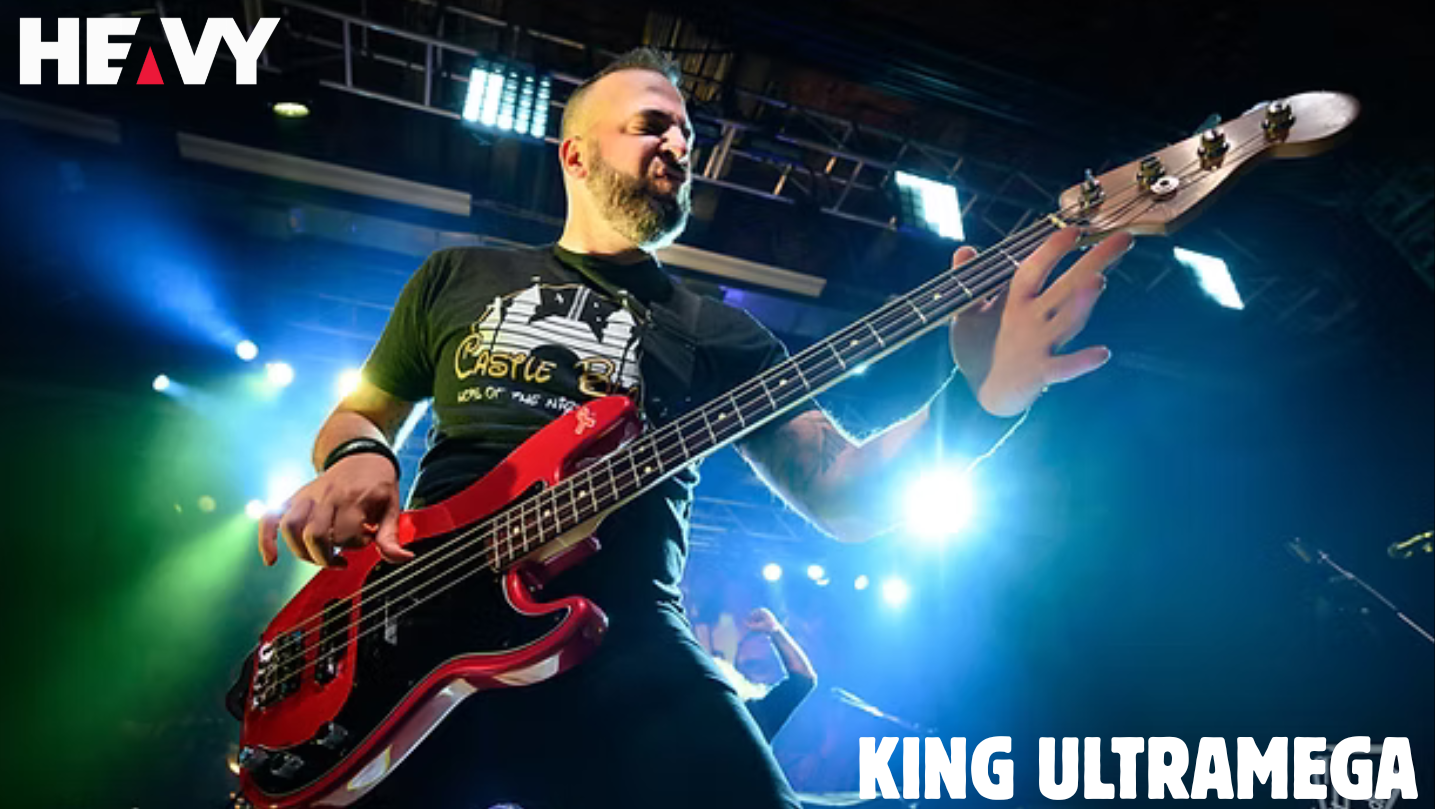
Honouring the music of legendary acts such as Chris Cornell is a task that not many could say they could easily achieve or at least not to other musicians. His work moves, it unsettles, it still catches people off guard, and still exposes every vocalist who has ever confused enthusiasm with ability. So when Mark Menghi stepped into that world with KING ULTRAMEGA, he did not do it with a quick nod, a famous guest list and a hope that everybody would behave nicely in the comments section.
He did it slowly, carefully, obsessively, and with enough respect to make the whole thing feel less like a project and more like a responsibility.
Speaking with HEAVY’s Ali Williams, Menghi explained that KING ULTRAMEGA began during the pandemic, back when musicians were stuck at home, the world was sideways, and apparently some people coped by making excellent music instead of reorganising the same cupboard twelve times and pretending it counted as personal growth.
It started with Menghi, Mastodon’s Bill Kelliher, Alice In Chains’ William DuVall and Anthrax’s Charlie Benante jamming Rusty Cage for fun. That was all it was meant to be. No big announcement. No grand statement. Just a group of musicians taking on Soundgarden because the song was there, the love was there, and the timing was strange enough to make it happen.
Then Kim Thayil heard it.
That is the sort of sentence that would make most musicians immediately rethink their life choices, posture and browser history, but it became the spark that pushed the whole thing into another space. Menghi and Thayil started talking, and eventually Menghi asked whether he would be interested in recording something together. The result was The Day I Tried To Live, with Benante again behind the kit, and suddenly KING ULTRAMEGA had moved from “this is cool” into “this might actually need to become something.”
Then, in true creative fashion, the songs sat there for years. Recorded around 2021 and left untouched until late 2025, they were not abandoned so much as waiting for Menghi to find the right reason to release them. He was honest about the hesitation. Taking on Cornell’s music is not a casual flex. It invites scrutiny, devotion, grief, memory and a deeply committed fanbase that does not need a second invitation to tell you when you have stuffed it. Fair enough too. Some catalogues deserve guard dogs.
For Menghi, the missing piece was purpose. KING ULTRAMEGA needed to stand for something beyond musicians paying tribute to a towering artist. That answer came through MusiCares, with 100 percent of proceeds going to the Recording Academy’s non-profit organisation, which supports people across the music industry through disaster relief, rehabilitation, mental health assistance and crisis support.
That decision gives the project its spine. It also makes complete sense. Cornell supported MusiCares during his lifetime, and Thayil has long been connected to the organisation as well. Kim was the one who suggested it when Menghi was working out where the proceeds should go. So the charity element is not an afterthought, not a glossy sticker slapped on the front to make everyone feel noble for five minutes. It is tied directly to the people, the music and the reason this project exists at all.
And once Menghi had that reason, he threw himself into the details with the intensity of a man who had accepted peace was never really on the menu. Inside his studio, he keeps a note in front of him that reads: “Do what’s best for the song.” Simple enough.. But that line has become the entire rulebook for KING ULTRAMEGA. It guides the musicians chosen, the arrangements, the artwork, the presentation and even the way the songs are released. Menghi is not interested in filling tracks with impressive names just because he can. He wants the right people in the right places for the right reasons, which is disgustingly mature behaviour for the music industry.
The guest list, however, is still absurd in the best possible way. Joe Satriani came into the picture after Menghi heard an Audioslave track while out running and kept imagining Satriani’s guitar carrying the vocal melody. Most people go for a run and return with sore calves and regret. Menghi came back with an instrumental arrangement idea and then had the fun little job of explaining to one of the greatest guitarists alive what was happening inside his head. Satriani, to nobody’s shock unless they have been living inside a badly tuned amp, delivered.
Lzzy Hale appears on two songs and brings exactly the kind of force and control required for material this emotionally loaded. Matt Cameron and Kim Thayil’s involvement gives the project a direct line back to the source, while the support of Cornell’s estate adds another layer of trust. This is not a random collection of famous friends wandering into sacred territory with their shoes on. It is a carefully built tribute shaped by people who understand what is at stake.
Menghi is not trying to recreate Cornell’s work note for note. Anyone with enough technology, patience and questionable self-belief can make a lifeless copy. That is not the aim here. His goal is to honour the original songs while finding a new way through them, adding fresh textures without trampling the emotional centre. It is a delicate line, one that he seems almost painfully aware of .
That awareness is obvious when he talks about Cornell’s solo material. Digging into songs like Preaching The End Of The World from Euphoria Morning, Menghi found himself confronted with just how much was happening beneath the surface: piano, synths, percussion details, Mellotron, arrangement choices, and the unmistakable traces of Cornell’s love of The Beatles. He started adding new sounds that were not in the original recordings but felt right for the spirit of the song.
Then came Dead Wishes, where Brann Dailor’s vocals opened another door in Menghi’s head, and suddenly he was hearing violins and cellos. This is where the project’s charm really shows itself. Menghi freely admits he has no business arranging strings, which is exactly why it works. He is not pretending to be the grand master of every instrument within a ten-mile radius. He is following the song until it tells him what it needs, then doing his best to chase that sound down before it escapes.
His family has apparently started calling this record his Pet Sounds, which is both sweet and mildly alarming, because any time a family starts naming your creative spiral, you know things have become serious. But Menghi is clearly learning as he goes. He spoke about discovering what he can do, what he cannot do, what he does well, and what he should probably leave to someone with credentials and fewer wild ideas before breakfast.
That process gives KING ULTRAMEGA its character. It is not polished into blandness. It has thought, effort, anxiety, affection and a very healthy amount of musical overthinking packed into it. Good. Overthinking is not always the villain. Sometimes it is the only thing standing between a moving tribute and a public embarrassment with a press release.
There is also a wider reason this matters. Cornell’s music is not currently being played everywhere, and Menghi pointed out that younger listeners are discovering some of these songs through KING ULTRAMEGA. Some people online even thought Dead Wishes was an original KING ULTRAMEGA song, which is both hilarious and a useful reminder that every generation needs to be introduced to the good stuff before the algorithm feeds them something beige and emotionally laminated.
For Menghi, that is part of the point. If KING ULTRAMEGA sends people back to Chris Cornell’s solo work, Soundgarden, Audioslave or Temple Of The Dog, then the project is doing its job. It is not trying to replace anything. It is pointing people toward the source with both hands and a very clear message: go listen properly. That same care shapes the release plan. Rather than throwing out a few singles and letting the rest of the album vanish into the streaming swamp, KING ULTRAMEGA is treating every song like its own release. Each track gets its own time, its own push and its own chance to settle with listeners. It is a harder road, naturally, because apparently Menghi saw an already complicated project and decided what it really needed was more pressure. But it is the right call. These songs are too important to be dumped out in bulk and politely forgotten by Tuesday.
Of course, the question of live shows came up, because music fans are nothing if not emotionally unreasonable with calendars. Menghi knows there is demand for KING ULTRAMEGA to perform live, but he also knows exactly how difficult that would be. Finding musicians willing and able to learn it all properly is hard enough. Finding singers who can carry an entire set of Cornell material without committing crimes against the human ear is another matter entirely.
Still, he has not ruled it out. In a perfect world, he would love KING ULTRAMEGA to play a show or two. Nobody knows when, where or how, which is probably for the best because the logistics sound like they require a priest, a spreadsheet and three people who have not slept since 1996. For now, KING ULTRAMEGA stands as a rare kind of tribute: one built with reverence, precision and actual intent. It does not rely on grief to do the work. It earns its place by treating the songs as living pieces of music, not relics behind glass.
Mark Menghi may be driving himself slightly mad in the process, but there are worse signs. Care looks a lot like madness when the work matters enough. And with KING ULTRAMEGA, the work clearly matters.