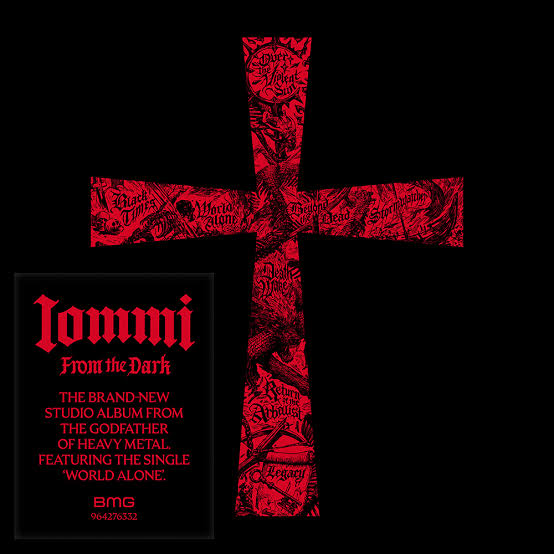




When you talk about the Mount Rushmore of heavy metal, the conversation begins and ends with the Riff Lord himself, Tony Iommi. But when the undisputed master of doom decides to unleash a brand new sonic assault upon the world, the heavy music community collectively loses its mind. Enter From the Dark, the monumental new album set to drop via Planet Rock on October 23. This record doesn’t just honour Iommi‘s legendary history; it forcefully kicks down the doors to a massive, thunderous future.
Forged in the fires of pure creative freedom and tracked without a single corporate deadline breathing down his neck, this project marks Iommi‘s first solo record in over two decades. It is a monstrous, heavy exploration overflowing with a sweeping “Nordic saga” vibe and massive Viking spirit. But the master architect of heavy music didn’t build this wall of sound alone. To command the smoke, Iommi teamed up with powerhouse Norwegian vocalist Jorn Lande, whose golden pipes have been channeling rock and metal royalty for decades. Rounding out this devastating core unit are the absolute weapon of a bassist Becky Baldwin and thunderous drummer Carl Brazil, alongside a highly anticipated guest spot from none other than Queen’s Brian May.
Tony agreed to answer some questions via email, which you can check out below.
How long have you been working on this new album, and how did the writing process come together?
IOMMI: It actually started quite a while back, doing just not taking it too seriously, like saying everything has to be made within a month or two months. I wanted to take my time and just put ideas down as they come on. But turned into really enjoying making them into songs. So it’s been over a period, but we’ve done it purposely because there was no deadline on it. I could do it at my own leisure.
With Black Sabbath having played their final show, does this feel like the beginning of a new chapter for you creatively? Has it opened the door to exploring other projects and collaborations?
IOMMI: Yeah, well after the beginning show was of course the final Sabbath thing. That was really the end of everything. I mean even if Ozzy had still been here, it would have been the end of everything. Because that was the plan. And yeah, it’s opened the door for me now to move on and do my own things. And it’s been great because I can do… There’s other projects… ideas coming in. People wanted me to play on their album, like Robbie Williams, who wanted me to do the track with him. And that was good fun, you know, to do that, and then do the video with him. And it’s been interesting to do that, something a bit different for me.
You’ve written some of the most iconic riffs in heavy metal history. When you’re creating new music, does everything still begin with a guitar riff, or has your songwriting approach changed over the years?
IOMMI: All the albums I’ve done, I think, starts with the riff. They come up with the idea of just put a riff down and then work on that. I’ve had periods where I’ve just put riffs down on a cassette and then put the cassette away and never seen it. Because always when I think, oh, I can play back and start listening to what I’ve got, I don’t tend to do that. I tend to sit down and come up with something new. I like to come up with stuff on the spot and then if it feels good at that time, then try and make it into something.
How has the recording process for this album differed from the way you’ve traditionally worked with Black Sabbath and on your previous solo records?
IOMMI: Well, this album’s been completely different from the past because – especially with Sabbath – we used to go in and do it there and then. But with this album, I’ve got my own studio and I go in and just put stuff down when I’m ready really. And then we decide who we’re going to use on drums or who we’re going to play on bass and do it that way.
You’ve recorded much of this album in your own home studio, working closely with longtime collaborator Mike Exeter. How important has that environment and working relationship been to the creative process?
IOMMI: It was important for me to do it at home because, again, there’s no pressure of having to hire a studio and get there. And Mike Exeter has been a great help. He’s been with me now for, getting on for, God, it must be 25, 30 years, and worked with me a lot. So we’ve got a thing rolling now. If I want to go and put a riff down in the studio, he comes and then he’ll put a drum beat down, just a programmed drum, and I’ll put the riff down. And then we build it like that, really. So it’s been good being able to do it at home. I mean, we’ve had to go into the studio to do some drums because I don’t have a drum room in my studio. It’s mainly just a control room, which works great for me, and then we just go into another studio to put the drums down.
What guitars have you been using on the new album? Have you returned to some of your trusted favourites, or experimented with anything different?
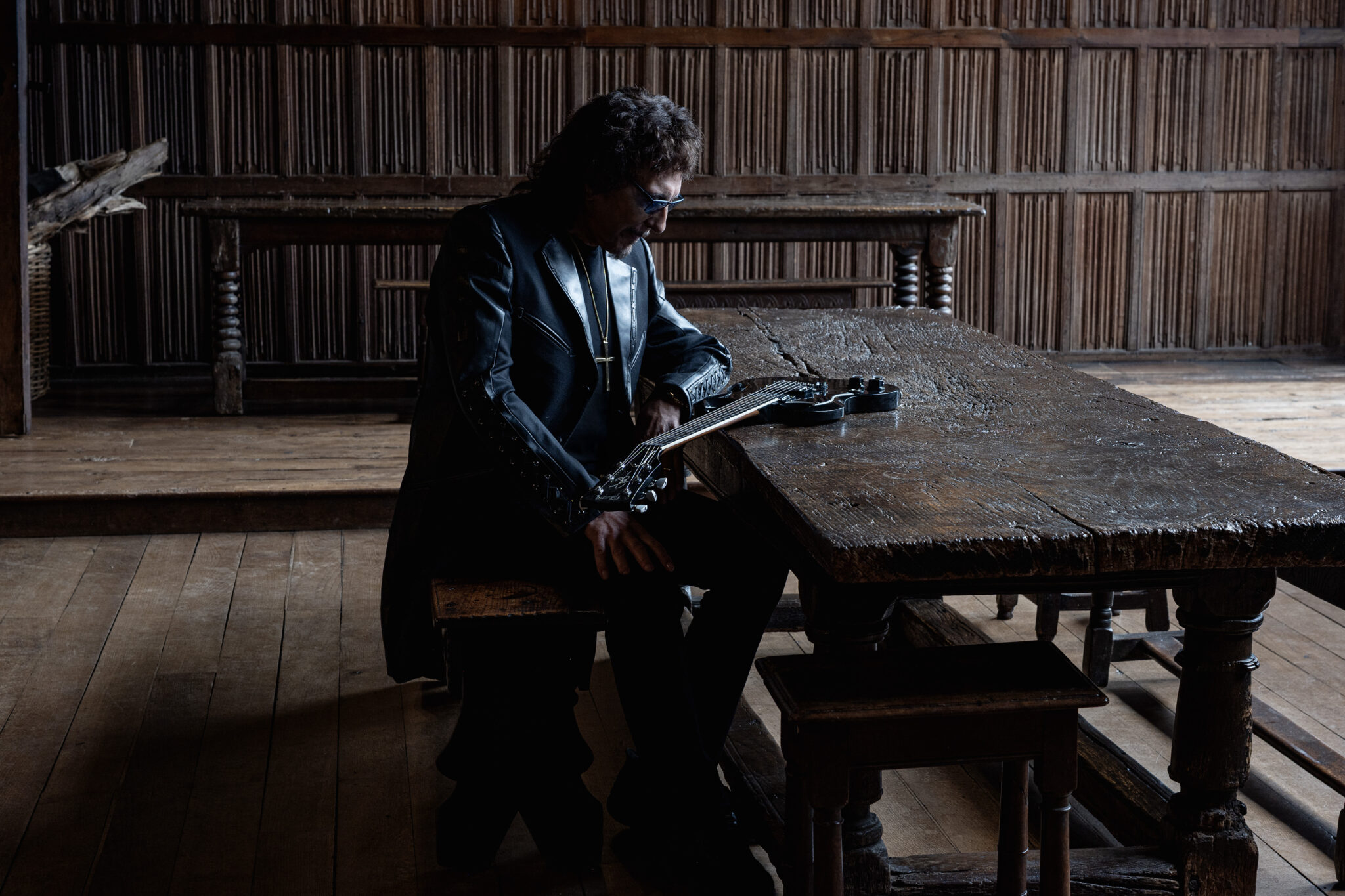
IOMMI: Yeah, I used, well I’ve gone through a few guitars for this record. The Gibson Monkey one, which is the replica one that is of my original. I used that one initially, and then I also used some of the JD guitars that he made me many years ago. The old boy that I’ve had for, god knows how many years, 40 years. So it’s mainly those really, Gibson and JD. And I think I used the Taylor as well.
You’ve worked with Jørn Lande before, going back quite a few years. How did that original connection come about, and what made you want to work with him again?
IOMMI: I think he came when I had this engineer with the producer. Bob Marlette was working at my house, my old house. And Jorn, I don’t know how we even got in touch with Jorn, I can’t remember. He came and sang on one of the songs, but at that time we weren’t sure about anything. It was just a trial. And at the end of the day, it ended up that the record company wanted to go back to a familiar face like Glenn Hughes. I said to the other guys, let’s try Jorn for this. And we did and he was good. No, I like him. I like his voice. I like his approach and the way he does stuff.
What was it about Jørn’s voice and approach that made him the right singer for this particular album?
IOMMI: Yeah, Jorn’s got a great range and a great powerful voice. I wanted a really powerful voice for this album. I’ve always had him in mind for something. He’s perfect, he’s nice to get on with, he’s a really good range, a good singer, comes up with some good ideas vocally. So he was, he was just the one.
How did drummer Carl Brazil become involved in the project, and what did he bring to the recordings?
IOMMI: Carl Brazil was a friend of Mike Exeter‘s. I think Mike, when we started putting the ideas down, we thought about a drummer and I thought, well, yeah, it’d be nice to use somebody from Birmingham. And Carl Brazil‘s from Birmingham and he’s a great player and really nice guy. And that’s what I wanted, wanted nice people that you can get on with and that love what they do. And Carl was certainly that one. He loves playing, he loves it. And hence I did the thing with him with Robbie Williams. So we sort of swapped.
Becky Baldwin is a fantastic bass player. How did you discover her, and what made you feel she’d be the right fit for the album?
IOMMI: I didn’t know of Becky. Again, we thought of different people and I thought, well, it’d be nice to use somebody who’s not that known but who’s good. As I say, I didn’t know her, but when we first heard her, I thought, yeah, she’s really good and she’s got Geezer‘s sort of style. Becky worked out really well and she’s a nice person and a great player, so we had a good team.
There’s a strong Birmingham connection running through this project, with several of the musicians having ties to the city. Was that a conscious decision, and how does it feel to see Birmingham embracing Black Sabbath’s legacy so strongly?
IOMMI: Well, yes, because I’m from Birmingham, it would have been nice to have that Birmingham relationship. I mean, Carl is from Birmingham. Becky lives in Birmingham now. She’s not originally from Birmingham, but she might as well be. She’s been there long enough. And I think, yeah, the relationship with ourselves and Birmingham has got really strong. But it’s great, and Birmingham has been really good to Sabbath. We’ve got the bench there, that big metal bench. We’ve got a bridge called Black Sabbath, and of course Ozzy’s got the bull in the station, so yeah, they’ve really opened up to Black Sabbath.
Having lived with these songs throughout the writing and recording process, is there one track on the album that particularly stands out as a favourite for you right now?
IOMMI: It’s hard to pick a favorite song off an album. And I always— that question always comes up every time you do an album. And things change with how you look at it. One day it might be, oh, I really like that track. And then a month later, oh, I like that one now. So it does vary. It’s hard to really pick a particular one. I actually like the one, the way he sings Legacy. I think that’s a really good one at the moment. But I’ll, you know, as I say, you move on to different tracks as you go on.
Pre-Order From The Dark here https://tonyiommi.lnk.to/fromthedarkPR