



Earache Records
June 13
Words by Kris Peters
I have always been a big fan of Buckcherry and their music. It holds an infectious air of defiance and a rebellious swagger that defies much of the music that has punctuated the last 25 years, with the band making an immediate statement early in their career with the classic song Lit Up from their self-titled 1999 debut album.
They have always been a band that skirts the shadowy side of the rock realm, defying trends and expectations while still managing to have somewhat of a crossover appeal that evades many others.
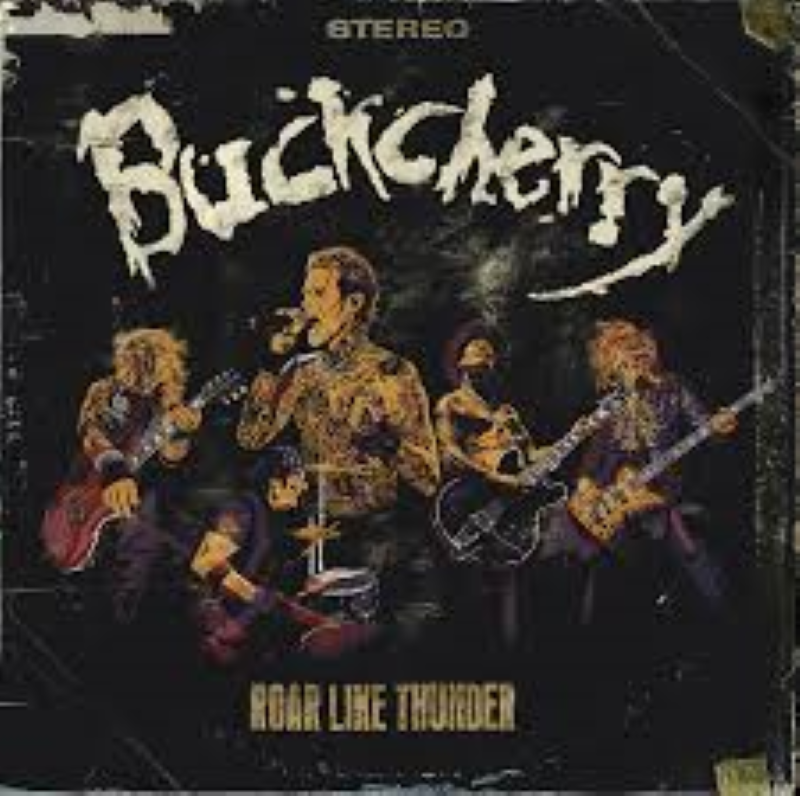
After losing track of the band for a few years, I caught up again with Buckcherry for their sensational Fuck EP in 2014 and have kept up with every release since. The band seemed to find a fresh air of rock-drenched goodness on their 2021 release Hellbound, which they carried through to Vol. 10 two years later, so it is with a great deal of excitement that I sit to listen to their upcoming album Roar Like Thunder, which is scheduled for release on June 13.
And Buckcherry come out swinging with the title track, a fast-paced guitar riff coming at you like a runaway freight train, almost catching you off guard with the sudden punch to the face instead of the customary theatrical intro passage that seems to punctuate a lot of new albums of the modern era. This in itself is a statement of intent. A call to arms, if you will, and an emphatic disclaimer that Buckcherry are still the heart of rock and roll some 30 years after their formation.
As vocalist Josh Todd enters the fight, crooning “You want the money, you want the fame”, it becomes even clearer that fame and popularity are the furthest things from Buckcherry’s minds when they sit down to write an album. Sure, that helps, but it has never been their main focus.
Guitarists Stevie Dacanay and Billy Rowe seem to be thoroughly enjoying themselves, laying down an impenetrable wall of sonic intensity that gives the rest of the band breathing space to do as they will. The first guitar solo comes in around the 90-second mark and ups the ante even further before a well-placed breakdown led by a slight shuffle of the drums acts as a temporary segue back into a rock-fuelled landscape that is raw, abrasive, and so very much welcome.
Francis Ruiz lays down a solid, almost tribal drum pattern to open the next track When The Sun Goes Down before Todd eases into the fray. Obviously, vocalists are the driving force of any band, but few do it as good and as consistently as Josh Todd. He has an instantly recognisable voice that is as comforting as the purr of a V8 engine and twice as lethal, which has always been the hallmark of Buckcherry’s success.
But already on Roar Like Thunder, you can hear the importance of the entire ensemble, with Ruiz, Decaney, Rowe and bass player Kelly LeMieux all stamping their strong DNA on the album before we even reach halfway through the second song. Which is accentuated by an early guitar lick that elevates the heart rate before Todd pulls it back to a manageable level. This is vintage Buckcherry with a much harder underbelly that sounds fantastic. The sonic wall of aggression blasting back at me now is almost intimidating, but strangely comforting at the same time.
Is that even possible?
Come On starts with a blues-infused guitar riff that recycles just enough to make me instantly think of Australia’s very own AC/DC. Not in the sense that it sounds like Buckcherry are ripping off our greatest ever musical export, but you can tell someone in the band has been listening to them.
There’s sleaze and disharmony written all over this track. Even the dirty guitars suggest layers of sleaze fuelled party times. But it’s not a sleazy song, if that makes sense. What it is, is another banger to start the album. Three strikes and counting. A wicked guitar solo catches me a little by surprise, but it’s the underlying thud of the bass that seems to be driving Come On. Without even looking at the press release, I am guessing this song was released as a single, and if so, would have done pretty well.
Talking Bout Sex changes tact considerably, with an almost early KISS vibe punctuating the initial exchanges. It’s not glam rock by any means, but it’s also not meat-and-potatoes rock and roll. The track is more of a throwback to the disco times with a healthy dose of instrumentalisation thrown in for effect. It sounds so good, I have only just realised the constant mention of the word sex, which says all that needs to be said. This song almost feels like sex, it is that beautifully put together,r and not even another tasty guitar solo can now get my mind out of the gutter.
Absolute banger.
Blackout is up next, and just as I find myself for the first time ever hoping for something a bit mellower so I can catch my breath, it arrives on the back of another blues slide that rolls through into the early stages of the song. A cool as fuck mini guitar off between Decaney and Rowe adds a moment of distraction before Todd slides into gear and directs us on our next journey.
This is a swirling storm of Buckcherry’s many influences, showcasing moments of blues with lashings of friendly rock laced with a harder edge of musicality that acts as an overriding force of intensity. Everything on Roar Like Thunder so far sounds unmistakably like Buckcherry, but with the volume meter turned past 12. It is loud, in your face, and unapologetic, which, in today’s increasingly sanitised musical landscape, is as refreshing as it is welcome.
I Go Boom even sounds like a blues song from the title, and from the moment the first guitar lick rings out, I know I am on the right track. Despite being much heavier in intensity, Buckcherry’s music is deeply rooted in blues, and it is more evident so far on this album than it has been in recent memory.
I swear I just heard a bit of brass in the mix somewhere, but before I can isolate the sound, another cavalcade of epic, sweeping guitar catches my focus and I get back to listening just for pure enjoyment.
An unexpected but awesome bass lead breakdown takes us deeper into blues town with a groovy and infectious passage that puts a slightly different spin on proceedings before Todd actually goes Boom, which snaps the band back into hard rock mode and takes us to the inevitable final explosion.
Another measured guitar run introduces us to Set It Free, which, surprisingly, maintains its more subtle approach once we get through the song’s intro. I might be wrong, but so far this is the only song that has continued in the same vein as it started, which is not something I would normally notice. Not that it is an unwelcome return to musical normality, but I finally get that chance I wanted to catch my breath that I was searching for three or four songs ago.
Of course, Decaney and Rowe have no intention of letting me get fully settled, ripping out a chunky solo that fractures the serenity before Todd lays more comforting vocals despite the guitarist’s insistence on keeping the pace going.
Hello Goodbye sounds like it could be the first album ballad, and a tempered guitar opening suggests it may well be. Eight tracks in for the first slower song. Not bad Buckcherry, not bad. Despite my general apathy towards the inevitable emotional burner that insists on invading almost every album ever released, Buckcherry have always been one of the few bands who don’t make me throw up in my own mouth when we get to it.
Think tracks like Sorry and Everything, and you will get my drift.
Hello Goodbye doesn’t feel like the obligatory heartstring puller either. It doesn’t reek of record company interference or mainstream crossover potential. It sounds more like it was a song that meant something to the band, and they wanted to include it on the album, not felt they had to.
And it’s also pretty fucken good, too. Put it this way, I made it to the end, which happens less frequently than you would think.
A tasty, almost retro-sounding guitar riff kicks off Machine Gun, bringing with it another wave of nostalgia and restrained recklessness. What could have easily degenerated into a by-the-numbers throwback to the nineties quickly becomes a trip back into dirty rock territory, complete with a stuttering passage of guitar interplay that ensures the underbelly of Machine Gun has both feet firmly planted in the popular late 90s rock movement.
A well-placed breakdown around the three-minute mark pulls you down a sonic rabbit hole before the guitars plunge through the growing darkness and drag us back screaming to the light. Buckcherry aren’t revolutionising music at all on Roar Like Thunder. But what they are doing is pushing it – and themselves – to their very limits, in turn creating a tidal wave of musicality that is wild and unrestrained. That sound is something that has always separated the good bands from the great ones, and with Roar Like Thunder I believe Buckcherry have well and truly earned that status.
But we still have one more song left for them to prove me wrong, so ladies and metalheads, please welcome the final track of the album, Let It Burn. The sounds of an air raid siren kick things off before the guitars ignite ,which forces the drums to follow, and it quickly becomes obvious that going out with a whimper is not Buckcherry’s style.
In fact, with Let It Burn they have come up with possibly the best song on the album. If not, it’s definitely the one with the biggest point to prove. This track reaches the highs of hard rock but then pushes them even further with an urgent, frenetic outpouring of emotion that carries through into the music and creates a swirling maelstrom of uncontrollable rage that is only stifled by the end of the song’s relatively short running time.
To say Roar Like Thunder is a return to form for Buckcherry would be doing the band an injustice. They have never really been out of form, but, and this is only my opinion, I don’t think they have ever sounded better.
Anyone who thinks rock and roll music is dead or dying should throw this album on the table and then say it. The music alone will be all the punch in the mouth they need to admit they are wrong.
Check out our track-by-track review of Roar Like Thunder with Josh Todd below.