

Daryl Soar is a lifelong Metalhead who, as a musician and writer, has spent years on both sides of the barrier. He is the vocalist and guitarist with Raptorgeist and loves sharing his passion for all things Metal. Whether it is an established name or a band playing its first handful of shows, he believes everyone has a story worth hearing.
After years of talking to artists and fans, the same concerns have come up time and time again. Through monthly Metal Breakdown segments, Daryl wants to explore those concerns, challenge some conventional thinking and hear what metal fans, musicians and industry insiders around the world have to say. Is metal dead? Can we still afford the price of entry? Who’s next? And, perhaps most importantly, am I right? Check out today’s first case study, Creative Bankruptcy.
CREATIVE BANKRUPTCY
Is this the age of creative bankruptcy? Every film a remake. Every series a retelling, a reboot or a reimagined trope for the modern audience. Every new band a carbon copy of someone from a bygone age. I’ve joked that the first three years of the 70s saw better music and more variety than the first 20 years of the 21st century. Hendrix, Black Sabbath, Led Zeppelin, and so many more. These bands not only wrote songs you could sing, you still know them today. Was this a stairway to heaven? Because from here it looks like a road to hell.
Now don’t get me wrong, I love these new old bands. As the old bands die or reach the end of their creative capacity, these young guns are arriving with the same energy and passion as the originals. Watching Joel climb the side of the stage as the rest of Airbourne rocked out was astonishing stagecraft. Meeting Jaylor, watching Silveroller and trying to place who they sound like. These are the moments that shape the future. In fact, as a little disclaimer, any bands I mention here I do so because I think they are fantastic and deserve the airtime. You must check them out if you haven’t already.
The more important question is: are you ready to check out something new and persevere with it? If you encounter a band that doesn’t sound like someone you already know, will you go back for more, especially when it’s so easy to skip to the next track?
You are hard pressed to find a band these days that doesn’t sound professional. While film budgets and technology have remained out of reach for mortals, the ability to spend months in a studio perfecting a recording has become democratised. Bands now record at home using technology that sounds like the greats and irons out their performance flaws. When bands needed to learn the craft at volume, only the best succeeded. When it took a record label to fund their endeavours, anything less than the crème did not pass muster. So now, in an age where a perfect take can be assembled and corrected from an average Joe’s best efforts, the crème is a vapour-thin layer above a sea of good-enough music. With modern technology and techniques, even song arrangements can be tried and tested at home. Where once a supreme songwriter was pressed to make the hard decisions about arrangements, today anyone with enough time and patience can work until their efforts are good enough or better.
This means standards are now so high in general that a kind of fatigue has taken over. The perfect recordings are being eschewed for authentic songs with raw playing, mistakes, a broad dynamic range, bum notes and all the issues associated with old-school records. Gone are the Melodyne-corrected vocals. Gone are the looped and multitracked guitars fed through amp modellers. Back are the single-ish takes recorded using microphones and real amps. Back is the sound of drums. And I can’t deny that it’s given me a fresh boost of enthusiasm for new music.
Another downside of all this modern technology is the rise of fake musicians. A cappella recordings of amateurs singing in kitchens, note-perfect with perfect tone. Authors claim that you too could do it if you buy their lessons. Except the vocals are tuned to A440 in post-production, leaving the live kitchen sound intact with a seemingly perfect take. It’s a con and it’s not just fooling people, it’s affecting their ability to listen to natural vocals. Real voices drift around perfect pitch, adding emotional content.
Then there is AI creating genre-style songs that are fooling genuine fans. Allegedly funnelling a greater share of revenue to the streaming services and away from genuine artists. And the internet is rife with virtuoso musicians being called out for miming to pre-recorded tracks, often played by someone else entirely and without writing credit. To me this represents the apex of creative bankruptcy, a crisis that I hope is short-lived.
To make matters worse, the bands we are prepared to pay to see are getting old doing what we already enjoyed, and the young are standing with us. Old bands are gaining new audiences thanks to the availability of their music and popularity in playlists. New acts lack the album sales and financial opportunities to climb the charts and gain traction. Thanks to the corporate robbers, that is, the online retailers you know and love, new artists struggle to get their fair share of the revenue. People can still get that viral hit like the good old days, but it’s getting harder as the pool of songs grows ever larger. As a result, artists are forced to sell merch at bloated prices at gigs with exorbitant ticket prices — even the established ones. It’s not a choice, it’s a necessity. And we are responsible. Because convenience is more powerful than our desire to maintain the art. We listen to music on our favourite streaming service and the artists receive a pittance.
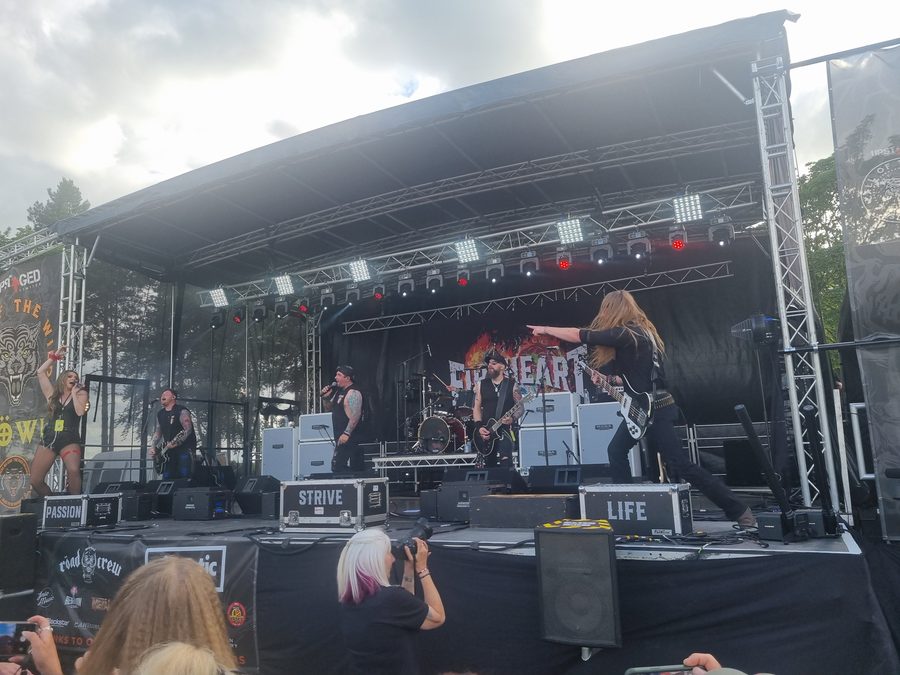
I don’t believe this is the end. There are bands that are finding their own voice, doing new yet familiar things or finding their own take on old themes. I saw bands at Call of the Wild 2026 that reignited my passion. Hearts and Hand Grenades thrilled me with their full-on attitude and unique sound. A stomping rock-metal groove with aggressive vocals and melodic hooks. Fireheart put on such a show that when the end of their set came, I couldn’t believe it had happened so soon. Their songs had passion and hooks from beginning to end. As a band, they all took part in putting on a show, making the audience feel like they are the only thing that matters. Because it’s true.
So what can we do? Try new payment models like direct subscriptions, multibuys and higher-tier streaming services. Or at least commit to putting some cash straight into the pockets of the bands we like by buying their merch. In the old days we worked a job and bought an album. To borrow a phrase from Rick Beato, the music we listened to demanded “sweat equity” to make it to our record deck. Which is precisely what we need to remember today. The more we empower the authors of new music, the greater the chance of the next new genre emerging. The next big metal artist is just a T-shirt purchase away from breaking even and being liberated to create groundbreaking new music that will fill stadiums and not just pubs. Reintroducing sweat equity to our music catalogue might just be the key to the future. With sweat equity comes loyalty, and with loyalty comes community and greater success.
The press used to be the kingmakers of music. While those days are gone, the modern press still has a role in finding and promoting the new and the different. They need to be generating interest in music that defies categorisation, not running from it in fear of their inability to pigeonhole it. Festivals like Call of the Wild and Stonedead, even the larger ones, don’t need the press anymore. Too many willing volunteers with hard-earned followings will promote them for free. But the bands at these festivals do. Without press interest, these bands will fail to gain traction with new fans. It’s a shame, but it’s true. I can only encourage people to spread the word about who they’ve heard to those they know. I wish I could do more. I wish I could be a kingmaker. But those times have passed.
Juxtapose the film industry with the music industry and we are starting to see the democratisation there too. However, in the film industry the talent that was excluded by prohibitive costs and a closed industry is now starting to rise to the top. Established film franchises are bombing despite insane budgets in the hundreds of millions. All while “low-budget” films are crushing it at the box office. While bands like Soul Revival aren’t reinventing the wheel or creating genre-defining music, they are creating fantastic songs that could be a solid foundation for the next big thing. Given the change in the film industry, coupled with the rise in small festivals, I’m starting to become optimistic for the future of rock and metal. If the film industry can overcome its hurdles, surely the low-cost music industry can learn to thrive once more. So I’m left to wonder. Is this the age of creative bankruptcy, or the dawn of a new era?
Next month, Daryl explores the topic of Cost Of Convenience.