



Interview by Ali Williams

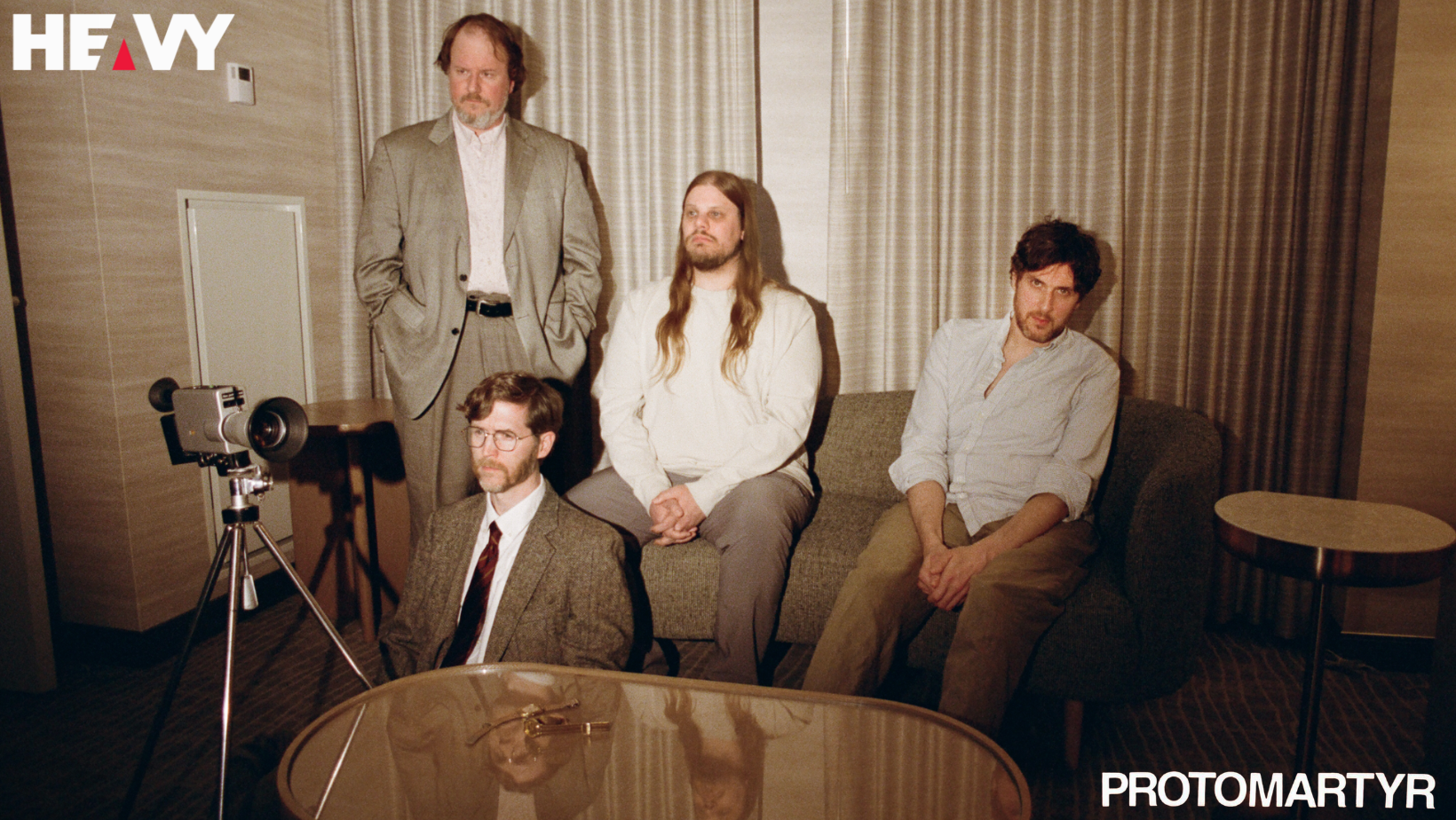
Sixteen years into a band, creative expansion can become a logistical problem. For PROTOMARTYR, the latest version apparently comes with horns, extra personnel and the growing realisation that every good studio idea eventually turns up on the tour budget demanding its own seat. The Detroit post-punk veterans are preparing to release their seventh studio album Hotel Usona on September 25, frontman Joe Casey dialled into HEAVY to chat with our Ali Williams about their new release and upcoming US tour. When asked how he would explain PROTOMARTYR to the uninitiated, his first assessment is brutally economical. “Really shitty. No, it’s great.”
He offers a slightly more useful version immediately afterwards. “I guess it started out as punk, and then we got better at our instruments, and so people call us post-punk now.” There is also Casey’s considerably harder-to-misinterpret summary: “We’re a loud yelly band from Detroit.” Fair enough. Sixteen years, seven records and an international audience later, PROTOMARTYR have earned the right to keep the sales pitch brief. The new record, however, has given the band a few fresh problems to solve. Guitarist Greg Ahee has pushed beyond simply making the guitars heavier, bringing trumpets and horns into the equation in an attempt to find weight somewhere other than the volume knob. “Greg the guitar player wanted to use horns because he wanted to try to be heavy in a different way, as opposed to just cranking up the guitar,” Casey explains. “Sometimes big massed horns can be scarier or louder than the guitar.”
That decision has also created one of the more practical questions facing PROTOMARTYR as the album moves from studio to stage: how the hell do they reproduce it live? Casey is keen to find out. “With a new album, you’re always excited to see if the new songs can survive live,” he says. “This new album has a bunch of trumpets on it and horns for some reason. That’s why we have to figure out how to do it.” It is an important test for a band that still places enormous value on performing. Recording may provide room to experiment, but Casey is clearly interested in what happens once those songs are placed in front of an audience and allowed to develop a life outside the studio. “As much as it’s fun recording a record, it’s even better to put it out there and see what people think,” he says. “You never know what the song’s gonna be that people latch onto.”
Sometimes that answer can be unexpectedly specific. Casey remembers playing in France, where one particular PROTOMARTYR song received an unusually enthusiastic response. A French friend eventually supplied the explanation: apparently it contained a drumbeat French audiences were especially fond of. Evidence followed in the form of several other songs carrying exactly the same beat. Apparently even national musical preferences can occasionally come down to the drummer. For all the added instrumentation on the seventh album, PROTOMARTYR have no intention of suddenly abandoning the identity they have spent years establishing. Ahee deliberately pushes himself to avoid rewriting the previous record, while Casey’s voice provides the constant. “No matter what they do, I’m the lead singer,” Casey says. “The way I sound is kind of stuck in the way it sounded when we first started. So no matter what happens, people can listen to it for 30 seconds and be like, ‘Oh yep, that’s Protomartyr,’ because of the way that I sound.”
It gives the musicians around him considerable freedom. The arrangements can move, additional instruments can arrive and the boundaries can stretch without completely disconnecting the result from the band responsible for it. Casey describes their approach to change as deliberately incremental rather than dramatic. “You don’t want to alienate people or try something that completely blows up in your face,” he says. “But if I’m yelling on it, then it will be a Protomartyr song.” Casey admits that earlier in the band’s life he probably would have preferred PROTOMARTYR not to change at all. Sixteen years later, his position has shifted considerably, and he believes that willingness to try new things is one of the reasons the band has survived for so long. Of course, musical growth comes with invoices.
What began as a four-piece gradually required additional guitar. Now the new material needs horns, or at least something capable of producing them, and the touring party keeps expanding.“You just kind of keep on adding members,” Casey says. “Which is great, but then you have to pay them all.” The logical conclusion arrives a few seconds later. “Why did we bring a tuba player on the road?” Artistic ambition has met accounting.
Those touring concerns are immediate, with PROTOMARTYR heading across America through October and November before continuing into Europe. Australia has already received a visit this year, with the band playing four shows during its second trip here, although Casey admits the usual schedule allowed very little opportunity to experience much beyond venues, airports and the next destination. Still, he makes it clear the affection for Australia survived the travelling.“It’s never enough time,” he says. “You play a show, and then you fly someplace else, and you play a show. But yeah, we love it down there.” The hope is to return in 2027, something Casey says the band intends to push for after allowing far too much time to pass between their first and second Australian visits.
That attachment to live music remains central to PROTOMARTYR, regardless of the size of the room. Large festivals have provided those occasional moments where the scale of the crowd forces the band to acknowledge just how far it has travelled, yet Casey still speaks fondly about small bar shows back home in Detroit. One performance in Paris, played shortly after a devastating tragedy in the city, remains especially significant. Casey describes an audience determined to be together, hear music and release something they had been carrying.“It was the best crowd we’ve ever played to,” he recalls. “People really wanted to go to a show and have a cathartic experience, so that was probably the most profound show we’ve ever played.”
It is a memory that sits well beside his preference for sweaty club shows where the audience is close enough for the exchange between band and crowd to remain physical and immediate. Sixteen years on, PROTOMARTYR are still finding reasons to alter the machinery without replacing it. Ahee keeps challenging the music, Casey remains the voice nobody is going to mistake for another band, and the latest record has pushed them into territory involving brass sections, expanded touring line-ups and questions nobody asks when forming a punk band, including the financial consequences of travelling with a possible tuba player. Hotel Usona is released September 25, followed by extensive American and European touring. If Casey gets his wish, Australia will not be left waiting quite so long for round three.
For now, PROTOMARTYR have new songs to release, new arrangements to wrestle onto a stage and years of evidence suggesting that standing still was never going to be an option.