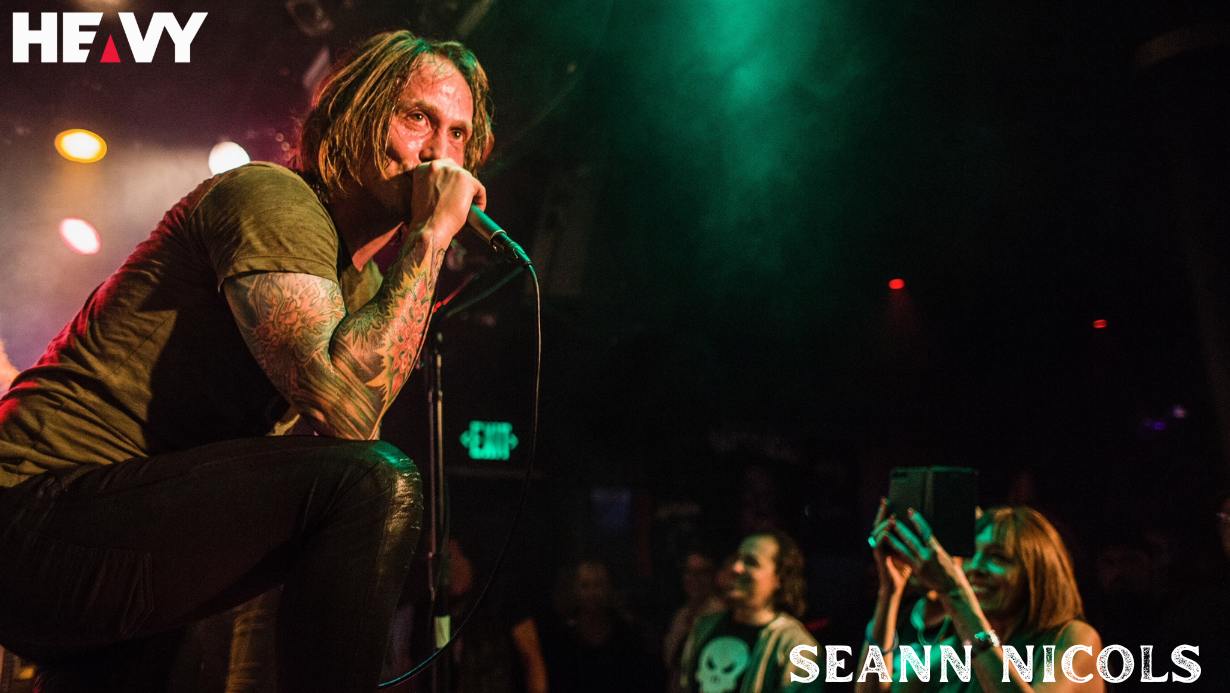




ABOUT THE AUTHOR: SEANN NICOLS
Seann Nicols is a Billboard-charting vocalist, producer, and vocal architect whose career defines the intersection of elite performance and technical innovation. Having fronted acts such as Adler’s Appetite, Quiet Riot, and Ratt, Seann has mastered the most demanding vocal styles in rock history. As the frontman for Westfield Massacre, he redefined the band’s sound on the album Salvation, achieving the height of its commercial success.
In partnership with Eclipsed Sounds, he developed HXVOC—the world’s first professional AI voicebank for rock and metal. He is an advocate for vocal health and an industry specialist helping the next generation of vocalists own their identity in the digital age. Access the HXVOC Voicebank at Eclipsed Sounds.
WHY I’M WRITING THIS
Since the news broke regarding Skid Row’s partnership with Sweetwater to find a new lead vocalist, my phone hasn’t stopped ringing. I’ve had numerous industry peers and fans reaching out, suggesting I “throw my hat in the ring” for the gig. While that kind of recommendation is incredibly flattering—especially for a band that provided the soundtrack to my youth—the reality of what this gig actually entails for a singer is a different story.
As someone who has stood on those stages and fronted those legacy catalogs, the news got me thinking about the current state of the industry and the physical cost of these “dream” gigs. I wanted to put this together not as an attack on any specific brand, but to offer some perspective to vocalists considering this path and an honest look at the sustainability of the modern Brand Machine.
DREAM GIG OR CAREER KILLER?
On February 5, 2026, the hard rock band Skid Row announced a first-of-its-kind partnership with Sweetwater, the world’s leading online music retailer, to launch a “worldwide search” for their next lead vocalist. Promoted as a genuine search for the right voice and presence to mark the band’s 40th anniversary, the collaboration invites singers from around the globe to audition for one of the most high-profile vacancies in rock. However, beneath the surface of this seemingly golden opportunity lies a stark reality regarding vocal health and the sustainability of the legacy brand model.
THE IMPOSSIBLE STANDARD: A TRAP SET IN 1989
In the late 80s, Skid Row recorded hits like 18 and Life and I Remember You. These songs weren’t just catchy; they were vocal stunts designed in the studio. However, it was their follow-up album, Slave to the Grind, that set a superhuman standard of range and power. Their original singer, Sebastian Bach, has openly admitted that capturing those performances in the studio was an exhausting process that demanded a singular, focused effort.
The Sustainability Gap: A studio recording is a snapshot of a peak moment. Professional touring, however, is an endurance sport. As Bach himself has noted: “Making a record is not the same as doing a show… I never had a problem doing stuff in the studio that might be impossible to do live.” He famously recounted needing a week-long break during the Slave to the Grind sessions after he blew his voice out trying to capture a single song. Expecting a human to hit those specific money notes night after night while subject to the changing conditions of venues, dehydration of travel, and the fatigue of a tour schedule is a recipe for inevitable vocal failure.
Asymmetry of Expectation: There is a fundamental gap in understanding here. While the band’s instrumentalists can maintain their performance levels for decades, the vocalist is playing a high-stakes game against their own anatomy—a game that usually ends only when the voice can no longer meet the brand’s uncompromising demand.
THE SHAM OPPORTUNITY: YOUTH GONE WILD VS. REAL TALENT
While the Sweetwater partnership is promoted as a chance for one lucky singer to find their big break, it raises serious ethical questions for the modern performer.
The Audition: Hopefuls are required to submit videos of themselves performing 18 And Life and Monkey Business specifically to showcase range and presence. By making these high-decibel, high-octane tracks the gatekeepers of the audition, the search pre-selects for singers willing to redline their vocal cords before they even step on a tour bus.
Marketing vs. Mentorship: This search generates massive PR and keeps the brand in the news cycle without the need for evolving creative output. It prioritizes the legacy brand while offering an opportunity that, for many, may prove to be physically unsustainable in the long term.
The Gear Fallacy: The danger of this partnership is the fundamental lie it sells: that singing for a band like this is a great opportunity to advance a career, when in reality, it is a calculated transaction built on a fantasy. While a guitarist can walk into a store and buy a new set of strings, a vocalist can’t buy a new set of vocal cords at Sweetwater. Once the singer’s voice reaches its inevitable physical limit, the band and the brand simply move on—but the singer is left with the permanent, lifelong cost of a high-stakes gamble.
THE ILLUSION OF PERFECTION: THE DECEPTION OF “LIVE” CLIPS
The band’s previous tenure with Erik Grönwall was highlighted by several live videos that sounded pitch-perfect.
Studio Enhancement: In an era of digital correction, it is common for live clips to be polished and touched up in the studio after the fact. While this protects the brand’s image, it creates a false standard of perfection that no singer can actually maintain under the grueling realities of touring.
The Human Cost: This contributes to the illusion that the catalog is easy for the right talent, ignoring the physical pain and potential permanent injury (such as Muscle Tension Dysphonia) that occurs when the human voice is pushed too far for too long.
DOING IT RIGHT: CREATING A NEW CHAPTER
There are successful, ethical ways to carry on a legacy that prioritize Art over Mimicry. The most enduring bands understand that a legacy is a living thing; it requires a new infusion of creativity rather than a static imitation of the past. By choosing to evolve, these bands protect the health of their new members and the integrity of their history.
True Collaboration: Success comes from finding a partner to fuel a new era, not an impersonator to prop up the old one. This transition shifts the focus from “matching a recording” to “building a future,” allowing the vocalist to sing with a technique that is both authentic and sustainable.
Pearl Jam: After the tragic loss of Mother Love Bone’s singer, Andrew Wood, the band found Eddie Vedder. They didn’t try to recreate Wood‘s style; they built a new identity that became legendary.
Alice in Chains: With William DuVall, the band moved forward with a singer who respects the legacy of Layne Staley, while bringing his own magic to new material. They evolved the sound rather than propping it up with a sound-alike.
Linkin Park: They found a partner to help them write a new chapter without being an impersonator. Emily Armstrong’s unique style and persona bring a new dimension to the band while simultaneously honoring their legacy with Chester Bennington.
THE SOVEREIGN SINGER: A NEW PATH
For modern singers, the lesson is clear: Own your style and own your identity. Do not allow yourself to be a disposable part in a legacy brand’s machine. The only way to survive the Brand Machine is to reject the role of the disposable stunt-performer and ensure your career is built on a sustainable foundation that respects your body as much as your talent.
Seann Nicols
Nerve Strike Records