

Out Now
Via Trollzorn Records
Words by: Courtney Stark
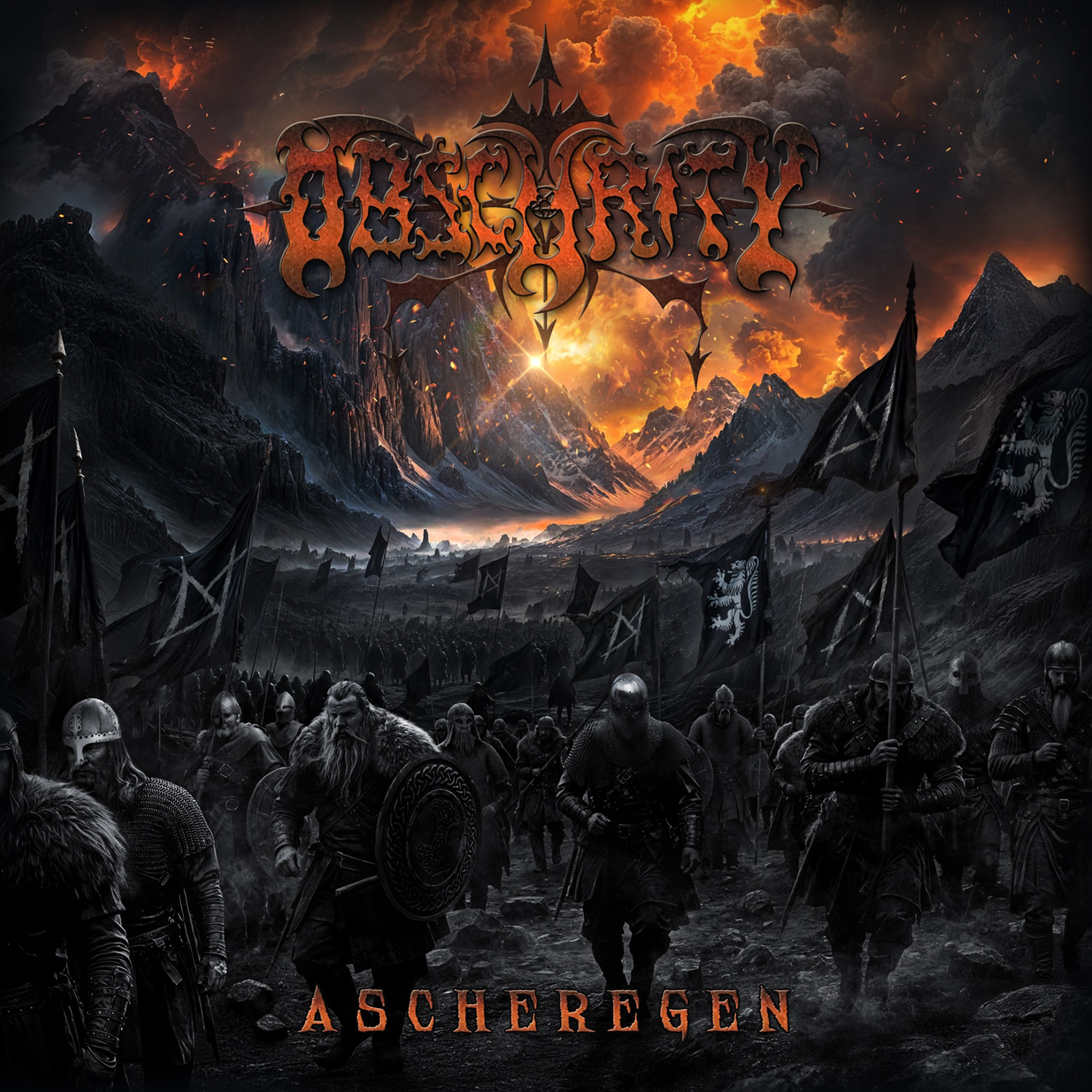
Formed in Velbert, North-Rhine Westphalia — a town better known for locks and fittings than Viking-influenced melodic black/death metal — Obscurity (1997) have built a cultivated body of work steeped in pre-Christian mythology, rendered through a fusion of black metal severity and melodic structure. From a lineage of resolve, restraint, ritual, endurance, and a distillation of atmosphere and memory, their tenth album, Ascheregen, feels like a resurrection of the band’s long-held vision.
After a stretch of internal restructuring and a lengthy hiatus, Ascheregen sharpens their sonic profile rather than fracturing under the weight of change. Obscurity remain true to their equilibrium of melodic death, black, and Viking metal, but push decisively toward the colder nerve of black metal — not out of ambition, but out of necessity.
The album carries a severity that recalls the band’s earlier, harsher era, with shades of Tenkterra and Vintar bleeding through its sharper, more disciplined pacing. When Erik Grawsiö of Månegarm appears on Rúnar Víg, it feels less like a cameo and more like an old alliance resurfacing. His German-language vocals add weight and texture without stealing the spotlight, fitting seamlessly into an album that has no interest in showmanship.
Lyrically, Ascheregen moves like a slow walk through ruins, threading Norse myth, the violence of Christianization, and the quiet rot of modern life into a single, unbroken narrative. From the ominous opening of Initium Dekadentiae to the closing echoes of Dystopie und Schwanengesang, the album functions as both elegy and warning. There’s mourning here, sure — but there’s also teeth. There’s liturgy and there’s resistance, intent, and a refusal to be anything but relentless. Ultimately, Ascheregen is an album that recognizes decay, names it, and refuses to look the other way.