



Nuclear Blast Records
24/10/25
Words by Greg Walker
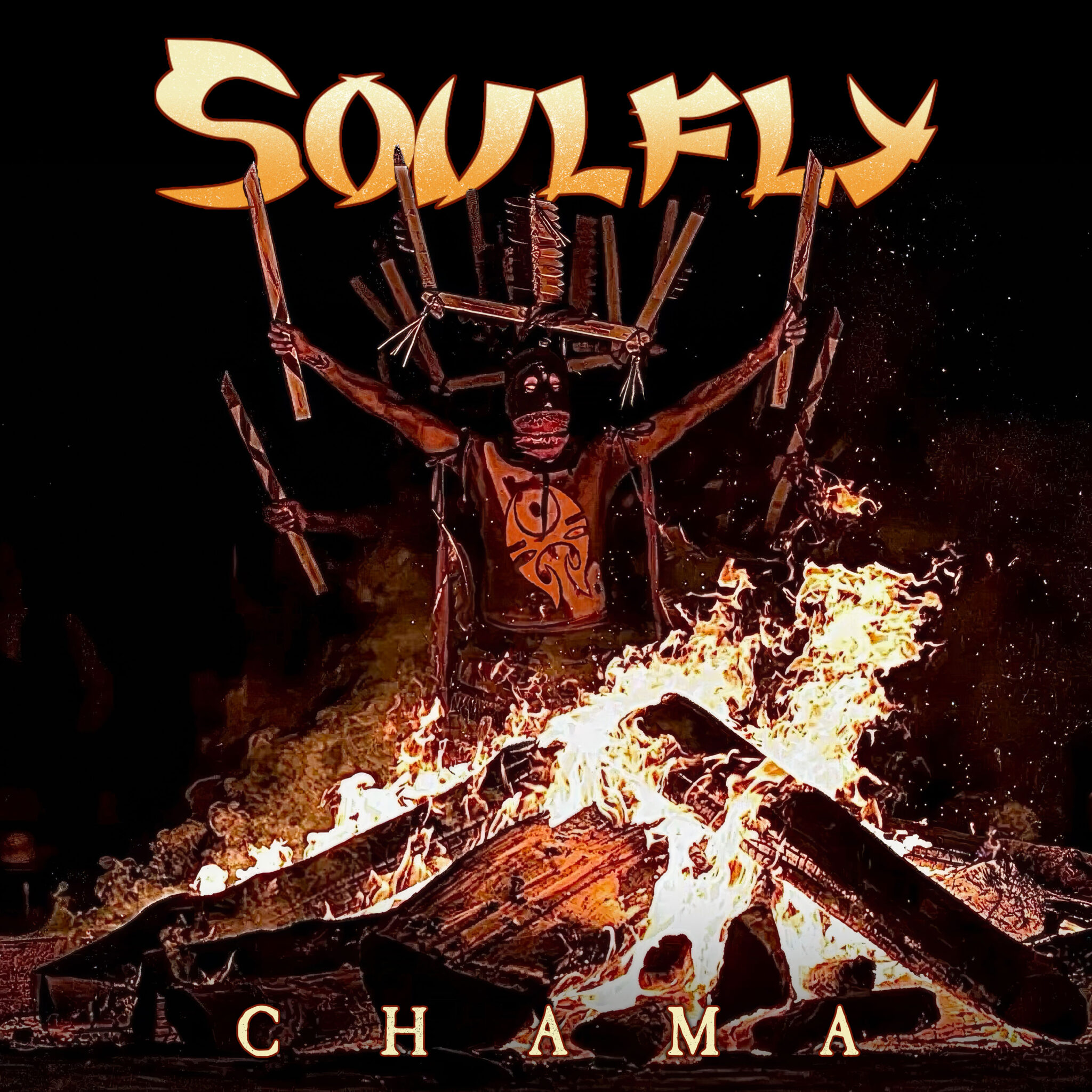
Soulfly’s pedigree speaks for itself. Their latter-day material mostly abandoned the Nu-Metal groove stylings that established the band, narrowing their scope in favour of a more straightforward death metal approach that is clearly steered by main man Max Cavalera’s taste more than Soulfly’s DNA.
Max’s own legacy is cemented: pioneer, innovator, third-world trailblazer, founder of no less than six successful bands encompassing the gamut between early death metal, thrash, industrial, punk, groove, Nu-metal, hardcore, and multiple conglomerates of all the above. Max has sealed his imprint on the metal landscape forever. Solidifying their popularity via 1998 debut Soulfly, Primitive, 3, and Prophecy, press interviews in the lead-up to new album Chama have strongly alluded to a return to that era of groove-propelled Soulfly. I feel this info was a bit of a misdirection, Chama being a decent outing but not delivering on certain promises that got me excited to seek it out.
Ever the champion of the downtrodden and displaced, raising invaluable awareness for devastated indigenous peoples worldwide, Chama opens with Indigenous Inquisition, an ominous buildup over Max’s roll call of destroyed Native American tribes. The promising addition of tight tribal sounding toms roiling between echoes fading left right, tension poised, ready to let fly into first single Storm The Gates.
Starting with an immediately heartening bouncy groove not unlike the second album Primitive, and despite being a healthy and enjoyable composition, the huge reverb on the vocals is distracting. I get that the nostalgic effect has its place, like in Max’s recent re-recordings of Sepultura’s Morbid Visions and Bestial Devastation, but the cavernous echoes were characteristic of those archaic releases. Zyon Cavalera’s production feels forced, “underground” murky, not crisp and clear like I’d expected from the lead-up press promotions.
Back to the positives, Max is a riff factory; something he’s always been able to do from the very beginning of Sepultura is churn out powerful riffs, and second single Nihilist starts with a cool mid-tempo drive, but again that distracting vocal echo sounds like Max is barking from the depths of a vast empty cathedral void of souls, his voice losing its natural power as the sound makes it way to the ears. Dedicated to L.G. Petrov, a fitting Entombed-ish riff in Nihilist’s chorus is wonderful nostalgia. It’s a treat hearing Dino Cazares’ distinct sound pierce No Pain = No Power alongside Todd Jones of Nails guesting his vocal talents. A sweet bridge slows proceedings, squealing guitars and chugging background pricks my ears.
Ghenna: now we’re really getting somewhere. A wonderfully chaotic kick-off descends into cumbrous punishment, with Arch Enemy’s Michael Amott on lead guitars adding a nice melodic element amongst the waves of violent machine gun bursts. Zyon Cavalera’s drumming throughout deserves a mention; he’s definitely more than holding his own, and if he were not a product of his famous fathe,r his performances would be spoken of with wider regard. Black Hole Scum is a monster, the production suiting this composition to a tee. Driven by an impressive grind, the breakdown riff is a blatant throwback to Sepultura’s Manifest outro, yet somehow more brutish.
Favela Dystopia is a traditional breakneck speed beast, transitioning into a Slayer-type chug complete with South Of Heaven era discordant guitar squeals circling overhead. The reverb on the snare beat immediately reminds me of the production sound on Slayer’s Hell Awaits, and I think that’s where my problems with Chama lie: I’ve always felt that Hell Awaits’ primitive sound held back potentially awesome material. Of course, it didn’t, considering what Slayer became. And if that’s the vibe Zyon Cavalera hoped to capture, then well done because I’m feeling that.
Always Was, Always Will Be… is another chunky headbanger, the yin to Soulfy XIII’s peacefully reflective yang, the former segueing seamlessly into the instrumental reprieve. A beautiful journey all its own, as Soulfly has embarked upon with each album’s instrumental piece, this track caught my attention the most, fading into the title track on a chorus of forest cicada. However, closing track Chama feels slightly off-kilter. The abrasive guitar tone suits this one as it morphs into a punk tempo before a subdued bridge, almost relaxing, lulls to encourage the outro reflection of the album we’ve just experienced.
The overall feeling I get from Chama is that it was difficult to let go of the brutality aspect, so it has some groove elements but feels caught in the metamorphosis between the death metal that Soulfly has become in recent years and what the design was meant to be. Handing production reins to son Zyon is one thing (the elder Cavalera offspring now having had ten years’ experience alongside his father in a professional capacity), however, I can’t help but feel his creative direction could’ve had a bit more guidance in the transition phase. Chama is a promising path for the fans who were there for the first few albums, and fingers crossed future material organically finds its way further down that groove rabbit hole.