



Label: Loma Vista Recordings
Release date: 25/04/25
Words by Greg Walker
As a born-and-bred non-practising Catholic, I feel a childlike sense of guilt and risk indulging Ghost‘s upcoming album Skeletá scheduled for release close to Easter. The reformed congregant in me is excited by the sense of adolescent rebellion in sitting down during the quiet of the day reserved for sombre reflection of Jesus’ miraculous Sacrifice, absorbing all manner of Ghost’s trademark anti-religious lore. For some of us, Ghost is just a melodic pop rock band, but to some 50-year-old lifelong metal fans, we can still garner an innocent thrill from Ghost, even if it’s personally challenging the distant past’s institutionalized brainwashing in the name of the Catholic church.
Over the course of 5 albums and 4 EPs so far, the soundtrack to the band’s trajectory has been carefully constructed over time to be fairly far removed from the genesis of Ghost, snowballing by design from proto-70’s heavy metal to now unashamedly embracing their Swedish pop heritage with new album Skeletá. Guiding light Tobias Forge is very clever at turning a phrase, creating entire songs that, to the casual listener, might appear to be odes to the light, yet on closer inspection are quickly revealed to be sheep in wolves’ clothing – He Is, See The Light, Call Me Little Sunshine, just to name a few. Skeletá holds no surprises other than being absolutely drenched in 80s pop and traditional heavy metal characteristics: catchy riffs, soaring melodies, egotistical solos, hooks til the cows come home, all catered to the grandiose extravaganza that Ghost’s live show has become.
As if to emphasise this effort’s heavily 1980s tilt, Peacefield is sparked by a very Van Halen sounding riff, the opener not as boisterous as the previous album’s kickstart Kaisarion, however in a puff of smoke Peacefield blossoms into a tailor-made stadium anthem. First single Satanized is more blatant than metaphoric, nefariously sultry, the overall style not straying too far from Tobias’ well-beaten left-hand path. It’s all here: the commercial pop, big guitars, the pomp and fanfare, the tongue-in-cheek Satanic schtick – it is tongue-in-cheek…right?
Track two and second single Lachryma harkens back to primeval Ghost in the crunch and riffage, a masterful example of bridging their earliest material with their modern era, the full-bodied production delivering thunderous punches balanced with sharp notes of clarity. Lachryma is a paradigm for what to expect throughout Skeletá, absolutely brimming with pop sensibilities, and nowhere is that more apparent than in the pseudo 80s power ballad Guiding Lights. No surprise from a band hailing from the land of Abba, the song seems simple enough, but is masterfully crafted. The chunky groove, sing along chorus melody, and a big but brief solo that begs for an 80s arena ego ramp, all allow Guiding Lights to stand shoulder to shoulder with any of its 80s contemporaries.
Elsewhere, tracks like De Profundis Borealis, Cenotaph, Missilia Amori, and Marks Of The Evil One offer faster tempo affairs, riffs with personality, blustery solos tapping into traditional 80s heavy metal, the latter track starting as almost Paradise Lost circa One Second era. Umbra boasts a pop synth intro that wouldn’t be out of place on a fantasy film soundtrack like The Neverending Story, giving way to a Mötley Crüe style riff replete with cowbell, the flashy keyboard vs guitar solo playoff building to combine as a dual lead break that’s just a treat.
Closing track Excelsis is the odd man out… not as jarring to the tracklisting as Twenties from Impera, it’s a slow burn waving lighters held aloft feel, more tension-focused rather than the bombast of the rest of the album. Emulating Faith No More in the bridge, the finisher is incredibly Beatles-esque, which is perhaps why it feels so distant from the rest of the material: its personality is set two decades previous. Excelsis delivers an elegant and rather quietened finish to an otherwise energetic run through.
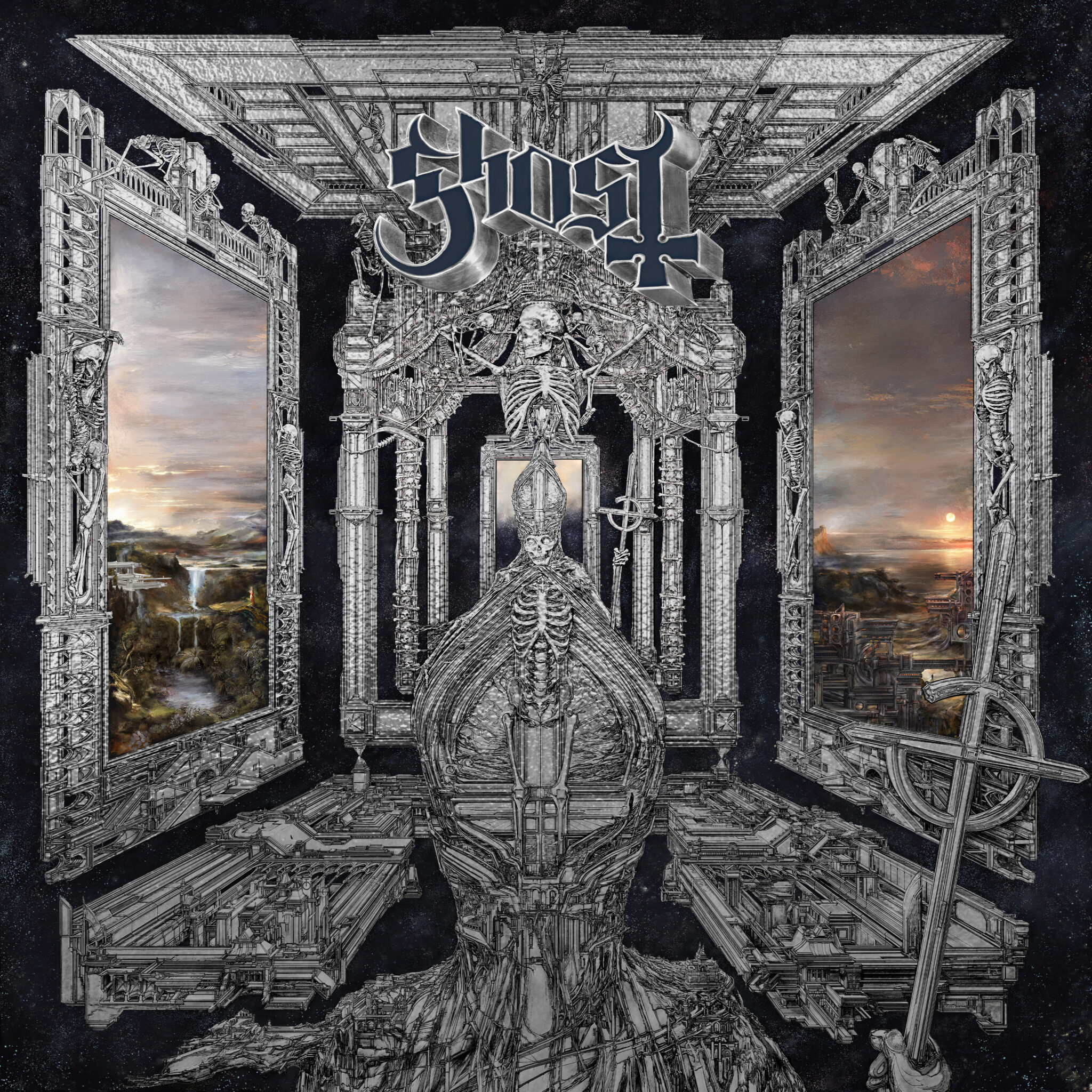
The only aspect of Skeletá that is truly old school metal is the cover art. Intricate and supremely detailed, it takes me back to my adolescence, where I’d often rush home with a record store discovery and study the ornate artwork whilst absorbing the music within. Another throwback feeling that is most welcome.
Ghost is a polarising entity in the metal community. If comment threads are to be believed, they’re one of the most hated bands in the genre, yet consistent years of packed-out tours worldwide are evidence to the contrary. Skeletá oftentimes feels like listening to an oldies radio station “Best of the 80s”, and that’s not a negative comment, that reminiscence is a warm feeling. After living with this album almost exclusively the past few days, I’m hanging to experience Skeletá’s material as part of the aural and optical orgy of Ghost’s live shows.
I’ve been well and truly on board the Ghost train since first hearing Ritual before debut Opus Eponymous came out. If Tobias is intentionally winding down the Ghost lore as has been suggested, and Skeletá is a vision of the future, count me well and truly along for the ride.